This article was originally published on June 22, 2023.
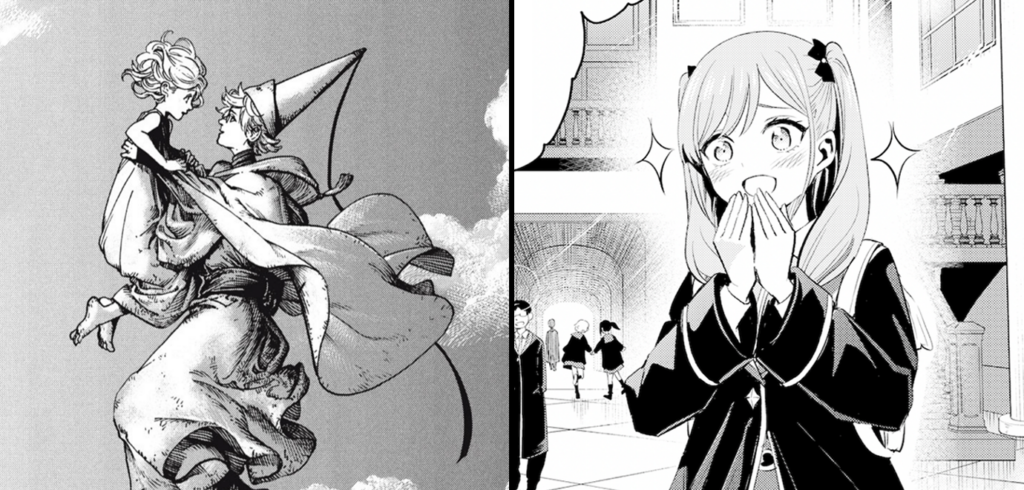
This is part 2 of a conversation between Yousuke Kaneda, the artist behind The Classroom of a Black Cat and a Witch, and Kamome Shirahama, of Witch Hat Atelier. If you haven’t read it, you can catch up on part 1 here!
Without further ado, let’s get back to hearing about their creative processes!
Is there anything you really focus on while you’re working on these stories set in the magical fantasy genre?
Kaneda:
Magical fantasy stories are always about people from places you’ve never heard of with customs unfamiliar to the reader. Thinking about it from the reader’s perspective, because it is a completely different world, the hurdle to get into the story is quite high for a lot of people. That’s why I set my story in a school – everyone is familiar with the concept of a school, even if the world itself is unknown. Having that as something familiar, I think the barrier to entry is lower. It’s still pretty hard to get across the culture and values of another world, though.
Shirahama:
It is, isn’t it. Deciding how much information to give the readers is difficult. There are probably people out there who want all the nitty gritty details, but there’s also the problem of folks who can’t get into a story because there is too much information about this unknown world. I treat this problem like I do cooking. Making a recipe you don’t know with ingredients you’ve never used results in the person eating it being a little wary before they dig in. But, if you take a food people are familiar with, like hamburgers or curry, and add some unfamiliar spices to that, people are more accepting because it’s curry, but these aren’t the normal spices, which is what makes it interesting. I think that’s what you’re doing in your manga, Kaneda-sensei. You’ve made a brand-new magical setting, but by adding the familiar spice of a school, you’ve created a charming world.
Kaneda:
I see! Comparing it to cooking makes it easy to understand. What would you say you use when creating your manga?
Shirahama:
I do a lot of “relatable creator things” when it comes to Witch Hat Atelier. I think more people who read manga are also drawing manga these days. And not just manga – I think a lot of people are creating things, so I include elements that all creators can relate to.
Kaneda:
Oh, really? Now that you mention it, there were times when I felt like I totally understood the feeling you were trying to get across.
Shirahama:
When there’s a shared emotion, like when a character is fretting over magic, I want the reader to be able to put themselves in the character’s shoes.
Kaneda:
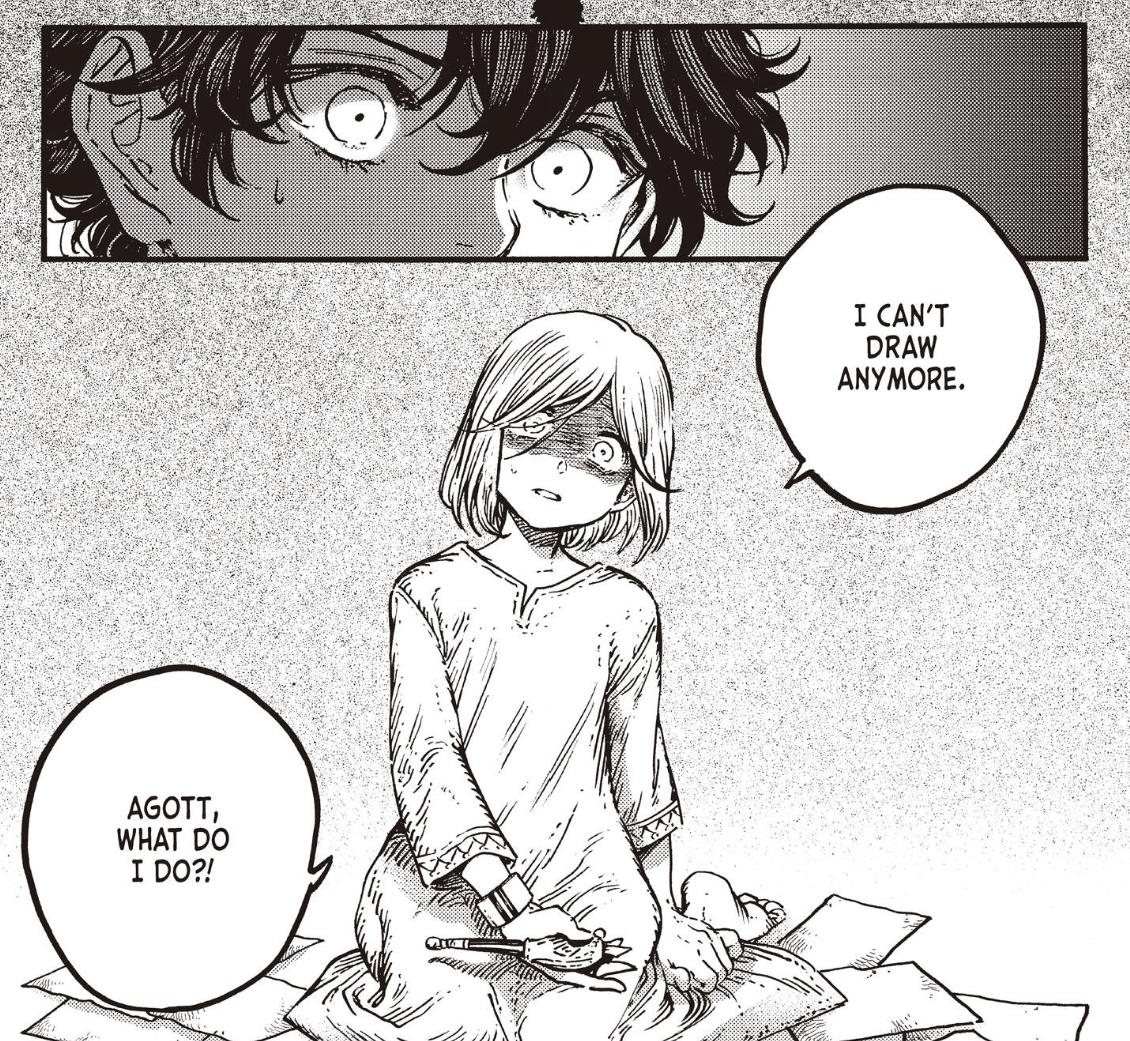
I understand. When Coco was worried that she could no longer draw magic, it gave me the same feeling as when I had trouble drawing storyboards. It really hit home.
Shirahama:
[laughs] I think having that shared emotion makes it easier to understand a character’s pain and the joy they feel when they’re freed from that pain.
Incorporating magic into daily life
Kaneda:
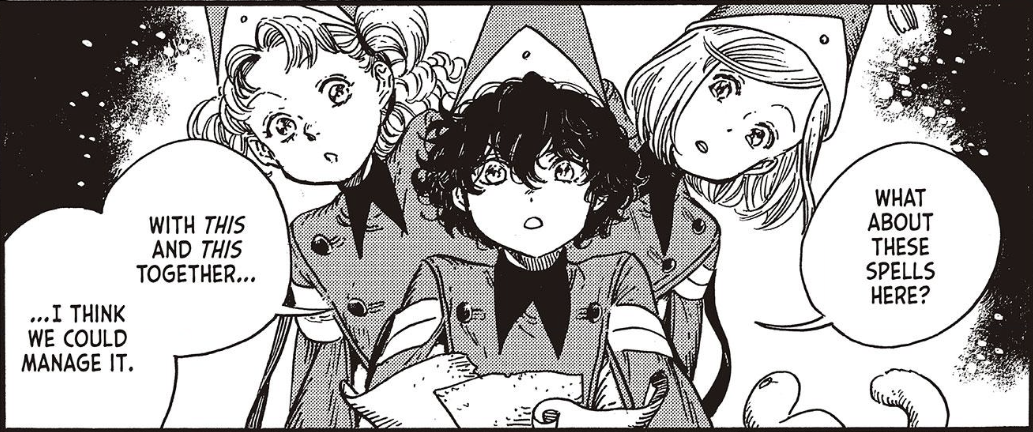
I feel like I have a better understanding of the charm of Witch Hat’s story now. If I were to speak about other parts of Witch Hat Atelier I find wonderful, it would be the way the characters get themselves out of the predicaments they find themselves in. Their solutions are quite interesting. It’s not that something in them suddenly awakens, or that they just brute force their way through problems. They use the knowledge they’ve acquired up until now and a flash of inspiration to get out of trouble, and I really like that.
Shirahama:
Thank you. I think coming up with the solutions to the problems might actually be similar to coming up with an escape room game. I imagine it like, they’re putting everything they’ve learned up until this point to use in a clever way. Also, I’m not very good at drawing epic battles in a cool way [laughs]. I don’t think the readers are looking for epic battles in this manga either, though. I think that the characters in The Classroom of a Black Cat and a Witch also use their ingenuity to solve their problems a lot, too.
Kaneda:
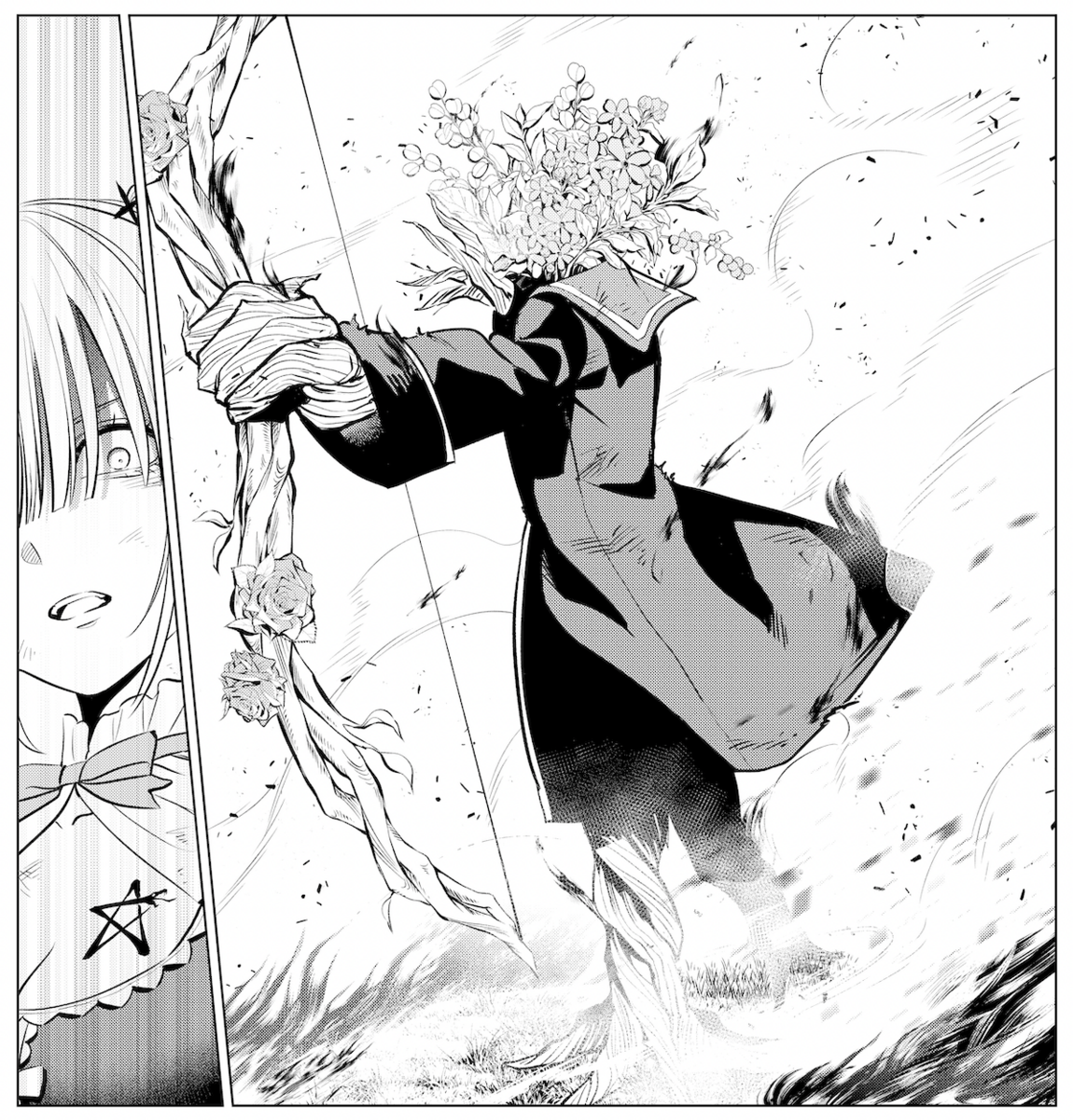
I think in part it’s because of the limits that exist within the manga. Though there are many types of magic, Spica can only use plant magic. She’s also written as kind of a clumsy character, so her range of spells is also limited in comparison to other characters. When I think about how she can use that handful of spells to get out of tricky situations, it’s not like I can force some grand magic into the situation, so it ends up being her ideas that resolve things.
Shirahama:
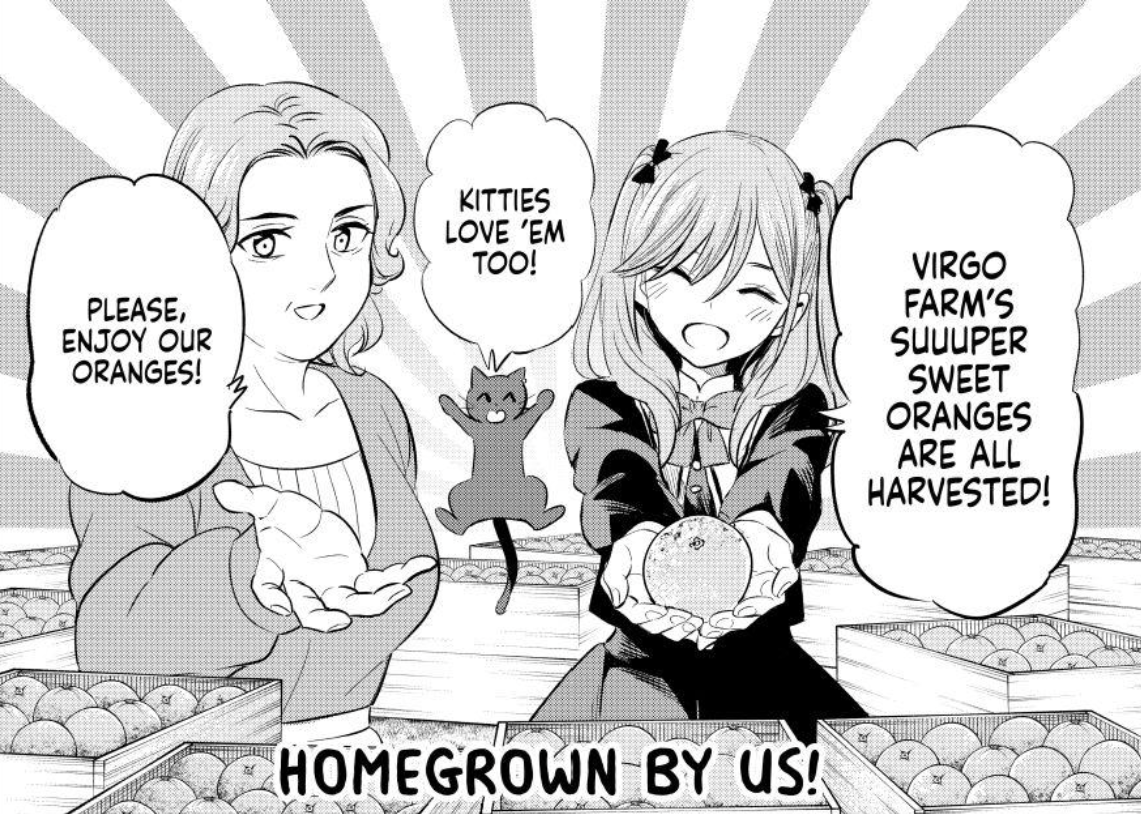
Spica can use “rebirth” magic, right? It’s magic that’s not associated with the zodiac signs. I think it’s really cute how she has this incredible hidden power, but she can’t quite get the hang of it [laughs]. She’s also full of determination though, which makes you want to cheer her on. That and her efforts in helping the family orange farm in the first volume made me laugh. She was meant to be using her magic on the farm to train for passing the entrance examination, but at some point, her main focus became producing a good harvest from the farm [laughs].
Kaneda:
Actually, that scene took some inspiration from Witch Hat Atelier. When Coco was unable to use magic, Qifrey told her that the best way to practice was to make magic a part of your daily life. From there, Coco found ways to integrate her training with her day to day and improved her skills. I was really impressed by this, and implemented it in my own work. I thought it might be more relatable to the audience if, instead of doing some mysterious training at the outset, the training was integrated into Spica’s life…
Shirahama:
So that’s how it was. Learning how to control her magic by helping out at home was like a dream come true, right? The way that explained so clearly how she came to be able to use her magic was impressive.
――Let’s talk about character creation for a moment. Kaneda-sensei, you mentioned that you used the zodiac signs as a motif…
Kaneda:
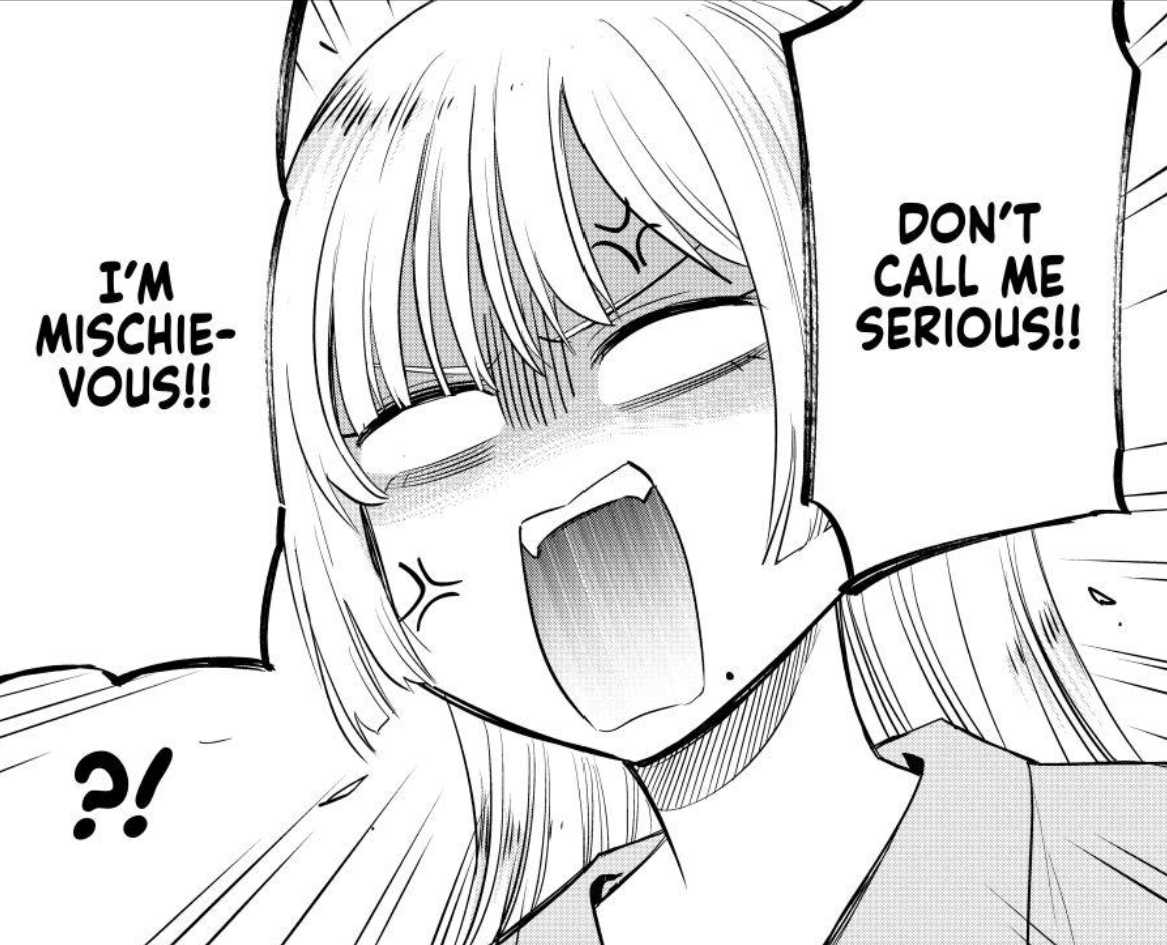
I did. Like I mentioned earlier, I based things on the personality analysis of the different signs. Other than Hana who I brought up before, Capella who uses Capricorn magic had a really impactful scene in her lead arc. According to the personality types, Capricorns are frequently said to be serious. My wife is actually a Capricorn, and she’s complained before that the only thing people say about her is that she’s serious and she doesn’t like that. I thought there were probably others who thought the same. I used my wife’s experience to create Capella’s personality. When the spotlight shone on her story, I remember there was a comment wondering how I was so good at understanding the feelings of Capricorns. [laughs]
Shirahama:
[laughs] So that’s how you came up with her. That’s really interesting! I think part of the charm of The Classroom of a Black Cat and a Witch is the contrast with the personalities. For example, one moment, Spica is holding a broom and chanting, then she leaps as if to fly, and on the next page, she’s fallen off the room [laughs]. It’s so cute. I’m actually not that good at coming up with characters myself…
Kaneda:
What?! But everyone is so unique!
Shirahama:
When they first appear, there isn’t much impact to them though – they’re just kind of there. I think they become more interesting as they interact with Coco and the others, though…
Kaneda:
I see what you mean. The relationship between Agott and Coco gradually builds and they become closer, which is very similar to how it feels to read Witch Hat Atelier. There are also scenes where character motivations are quite solid, which I also think is wonderful. Do you typically put a lot of thought into developing the personalities of your characters?
Shirahama:
Not really, they just kind of naturally end up being what they are. I don’t decide what type of magic they’re good at either, it often becomes more apparent as I’m drawing.
Kaneda:
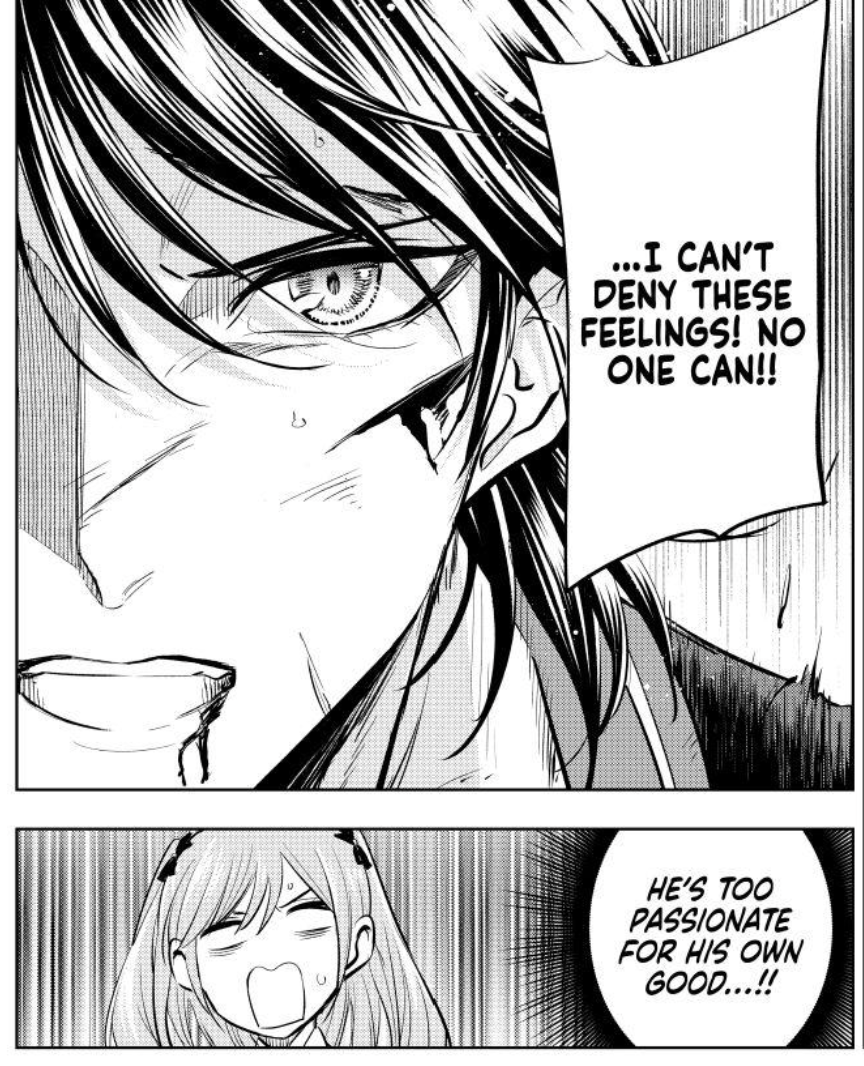
I see. If you don’t draw them, you can’t tell how a character will behave, right? For The Classroom of a Black Cat and a Witch, I didn’t intend to make Astraea that weird of a character. I was actually planning to make him more calm.
Shirahama:
Wait, really? [laughs]
Kaneda:
He really ended up becoming a rather lame guy with a handsome face. I really like Luluci in Witch Hat Atelier, actually. Unlike Astraea, she’s so cool! Every time she shows up, I get excited. I really love cool female characters.
Shirahama:
They are great, aren’t they. Thank you!
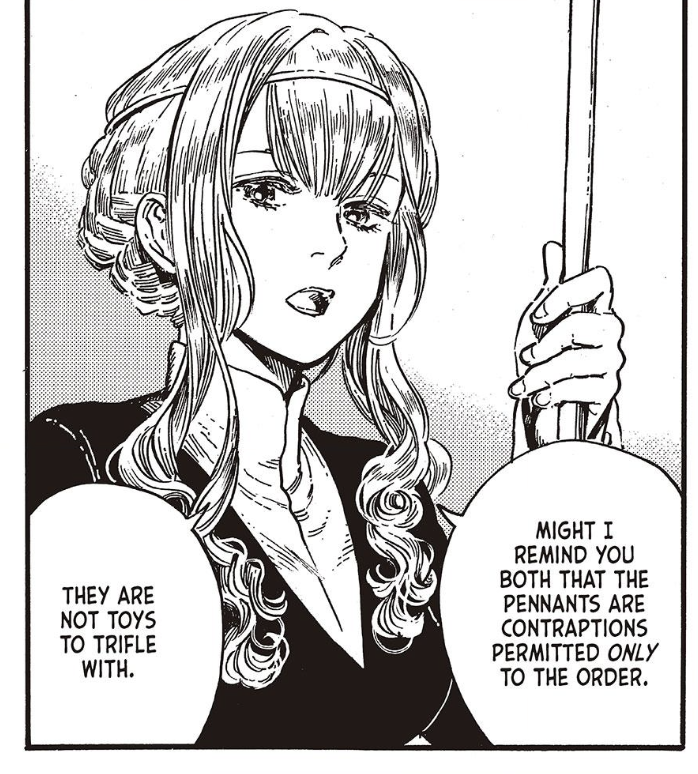
Even the problem children have a place they belong.
――Finally, could you say a little something about each others’ manga?
Kaneda:
With fantasy stories, the world is your canvas, but I think it’s a wonderful thing for modern people like ourselves to be able to connect with the themes in them. I love how Agott and Coco’s relationship grows and develops along with the girls themselves. I think that’s something that definitely resonates with readers of today. And, more than anything, I love the aesthetic of Witch Hat Atelier. The way that master and student are united… I’m really looking forward to future developments!
Shirahama:
The Classroom of a Black Cat and a Witch is all about working hard, and cooperating with your friends. It’s a story about magic, but I love that it feels like there are also real learning moments you can take away from it. It’s a shonen manga, but at times it also feels like a children’s book. I think it’s wonderful that even students who would be left behind in a large class can find their own path to learning and growing. I also love that even those who would be considered problem children have a place they feel they can belong. I think that some readers will really appreciate that aspect. I’m looking forward to how the story unfolds.
――Thank you both for today!
Click below to reach Witch Hat Atelier!
Click below to read The Classroom of a Black Cat and a Witch!
Recommendations
[Witch Hat Atelier x The Classroom of a Black Cat and a Witch] Making Magic with Yousuke Kaneda and Kamome Shirahama – Part 1
Special Talk with Katarina [Shangri-La Frontier] and Fujino Omori [Wistoria: Wand and Sword] – Part 2
[The Fragrant Flower Blooms with Dignity] Sweet Romance with Saka Mikami – Part 2
Special Talk with Katarina [Shangri-La Frontier] and Fujino Omori [Wistoria: Wand and Sword] – Part 1
[The Fragrant Flower Blooms with Dignity] Sweet Romance with Saka Mikami – Part 1