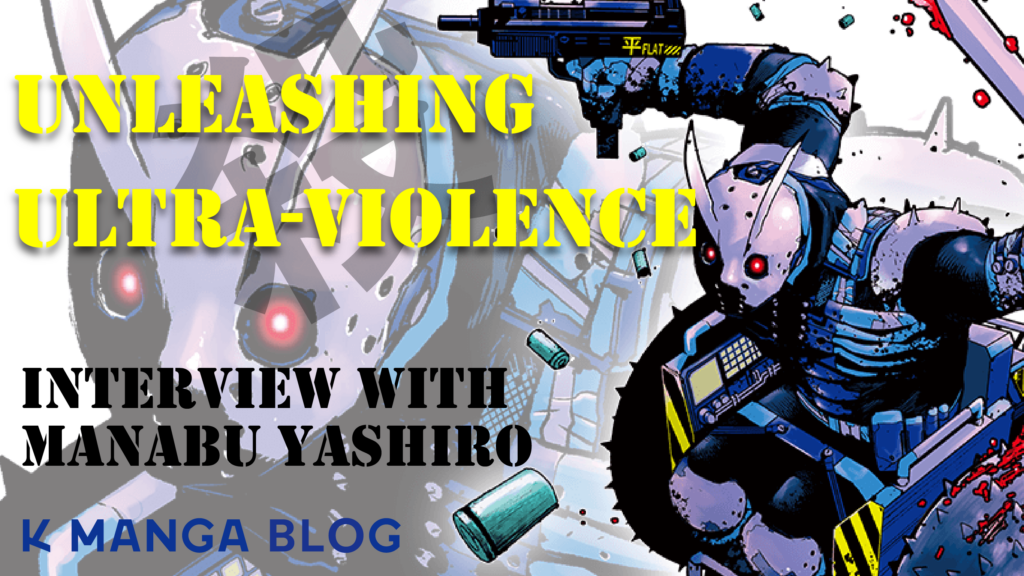
On a lawless island where only the dregs of society reside, a paralyzed former hitman is on a wildly unorthodox road to recovery. We sat down with Manabu Yashiro to talk about his manga origins, the wild world of Guicheng Island, and designing high-octane battle sequences!
Let’s start at the beginning – what made you want to become a manga artist?
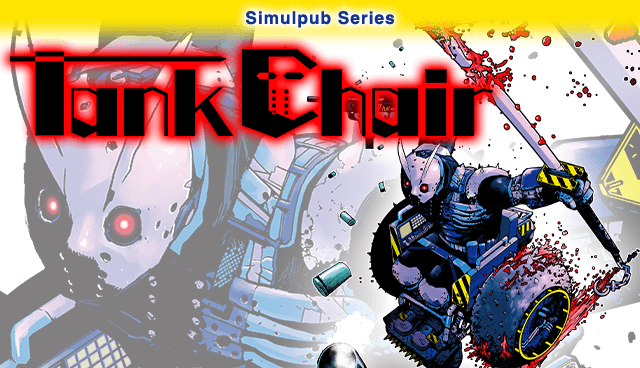
I drew my first manga when I was in my second year of university. At that point, I’d never drawn anything with proper paneling and the like, so it was only at a hobbyist level. As it got closer to where I’d need to start looking for a job for after graduation, I wasn’t sure what I wanted to do with myself. There was also the factor of the terrible job market at the time, so part of it was me running away from reality. I knew I could kind of draw, and I got into Bakuman at the time, which made me think to myself, maybe it would be alright to try my hand at becoming a manga artist. I submitted my first story to Jump, and got assigned an editor, and that was it. After working as a manga artist for a few years, I stepped away from it and entered the regular workforce for about 7 years until I started on Tank Chair. Ultimately, I ended up quitting my job and now I’m working full time as a manga artist.
Are there any specific manga series or artists that made an impact on you when you were first learning how to draw?
I loved Shigeru Mizuki’s Gegege no Kitaro and Akira Toriyama’s Dragon Ball as a kid. I’m the youngest of four, with three older sisters, so there wasn’t really any shonen manga around, but after watching the anime versions on TV, I was hooked. Around the time I started to draw my own manga, I took a lot of inspiration from Katsuhiro Otomo (AKIRA) and Tsutomu Nihei (BLAME). Not just design and paneling, but the mindset and attitude behind creating something original.
Where does your broader inspiration come from?
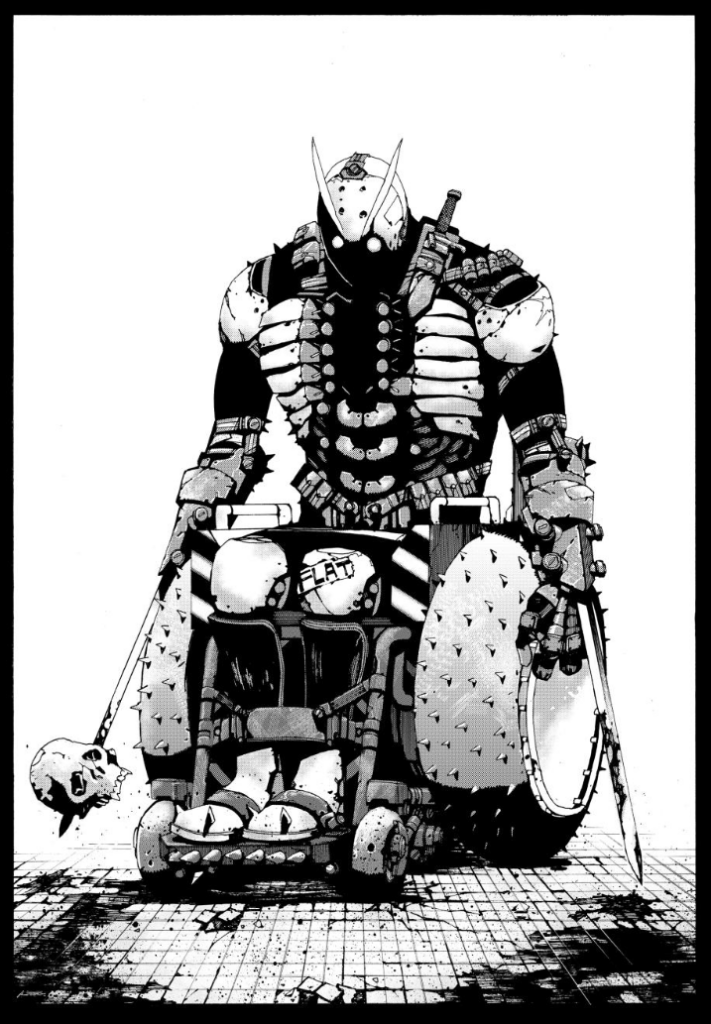
I really enjoy movies, so a lot of it comes from things like the world of Mad Max, or hero movies like Batman or the Marvel universe. I also get a lot of inspiration from kaiju* movies and tokusatsu**. The whole atmosphere of those worlds ruled by lawlessness and violence, and all the crazy imaginative gadgets are amazing fuel for inspiration, like wondering what kind of batmobile Batman would use if he were a wheelchair user.
* for example, Godzilla
** for example, Power Rangers, Ultraman, etc.
Why a wheelchair for the main protagonist?
I just thought that it would be interesting to see that kind of character. There are protagonists, heroes like Daredevil and Zatoichi who are blind, but I couldn’t think of a single character who was in a wheelchair doing aggressive physical movement. There’s Professor X from X-MEN, but he’s a telepath. I wanted to try drawing a wheelchair user who was really physically powerful.
The disability representation in Tank Chair is quite different from what readers typically expect of a wheelchair user. How did you approach researching or conceptualizing that dynamic before drawing?
A big influence was my own father, actually. In the 2 years before he passed away, he used a wheelchair. I did a lot of research on the mechanics and functions of wheelchairs by looking through manufacturer catalogs and books. One of the core concepts I put a lot of focus on is that the chair is powered by the strength of the person using it. It’s like Spiderman and his suit – the chair is just a tool to draw out that power, assist, and control it.
What was your process for coming up with all the specific chair modifications?
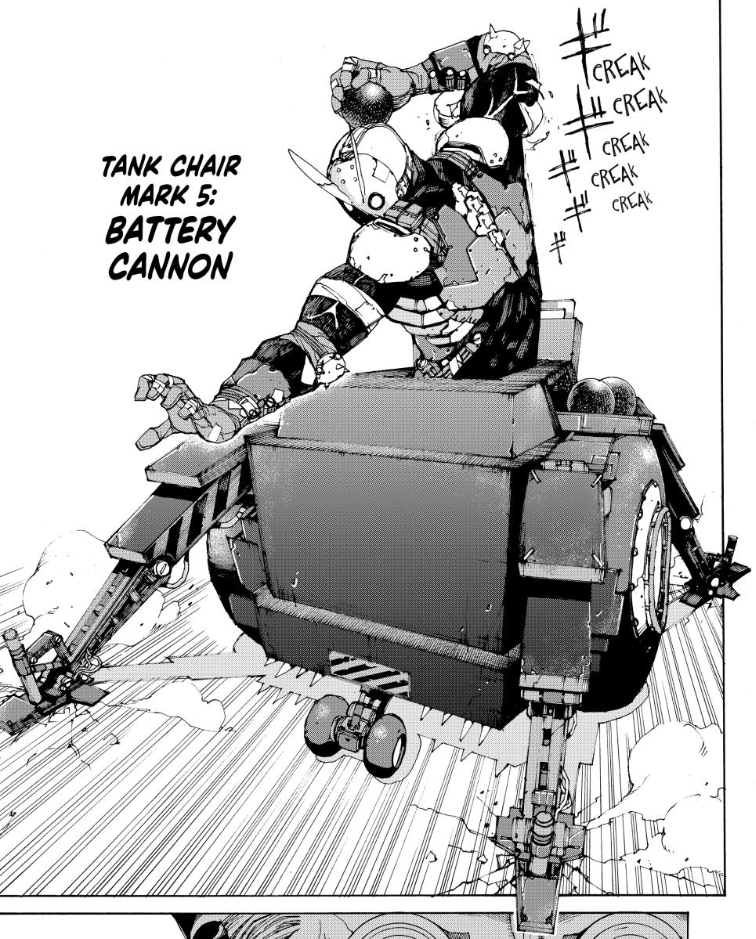
Sometimes, I’ll draw inspiration from real-world situations, like the special chairs used in parasports, and sometimes from fictional sources like Iron Man’s suit or the gadgets in hero movies and comics. I’ll also come up with designs by working backwards from the opponent, like for example, if Nagi were to fight a sniper. I thought that whipping out a huge gun to fight back isn’t very “Tank Chair“, so instead he’d hurl heavy iron balls at his opponent. For that to happen, the chair would need some attachments to stabilize the chassis. The designs often come out of necessity for the story or the action.
How do you strike a balance between real-world accuracy and dramatic visual impact in your art?
It really depends on the scene as to how realistic I go with it. For example, the first appearance of a character or something where it’s important for the structure to be clearly defined, I’ll work a lot of detail in with the linework to make it as realistic as possible. In panels where there’s more of a slice-of-life vibe or more of a focus on the mood, though, I’ll keep it simpler to match that. When it comes to action scenes, I prioritize more extreme angles and use techniques like foreshortening instead of sticking to a realistic camera angle to really convey the emotion and visual impact of the movement.
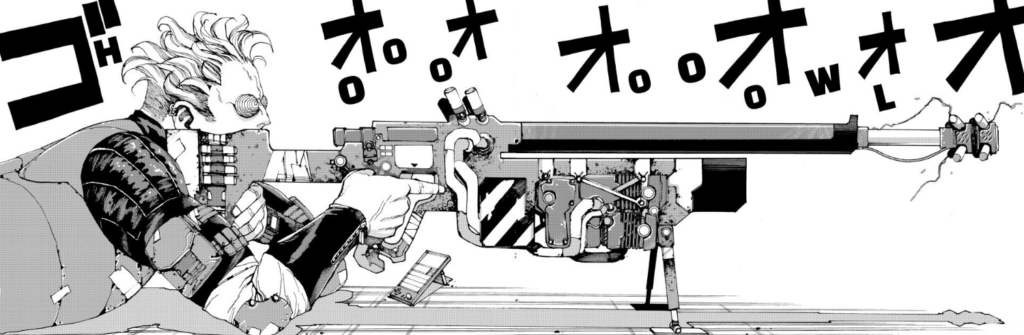
How did you land on the gene-splicing idea?
When I was drawing the first chapter, I wanted to make sure the wheelchair action-violence would be something that the readers could accept as entertainment, and that they would approve of the protagonist’s actions. I didn’t want to go with straight-up monster-slaying action like Monster Hunter or Ghostbusters – I really wanted to keep it as a battle between humans. Having the protagonist rip and tear through ordinary human beings would make him come across as a bit of a monster himself, though, so I came up with the gene splicing concept. They’re still human, but mixed with different animals like gorillas and chameleons, which balances things out perfectly and allows the action to be pure entertainment.
What’s the story behind all the mahjong and Mandarin references woven through the story?
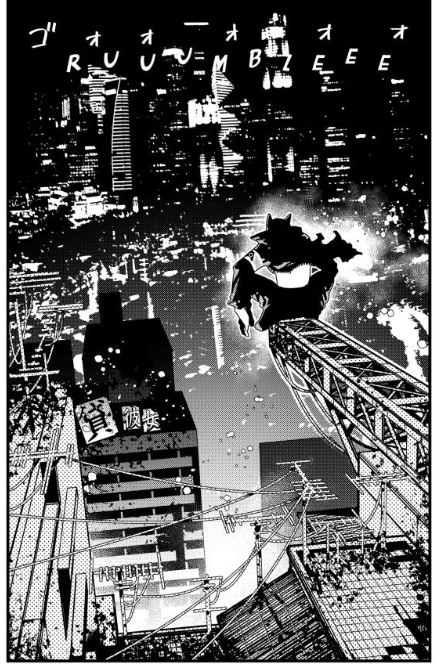
I love how decaying urban landscapes look, the whole ruined aesthetic, and I really wanted to incorporate a kind-of “Asia retro” flavor like the Kowloon Walled City into my work, hence the naming style and the aesthetic. The island itself is set somewhere in the Sea of Japan, and takes some inspiration from the ghost towns that sprang up as a result of the burst of the bubble economy, all those huge residential complexes that were just totally abandoned.
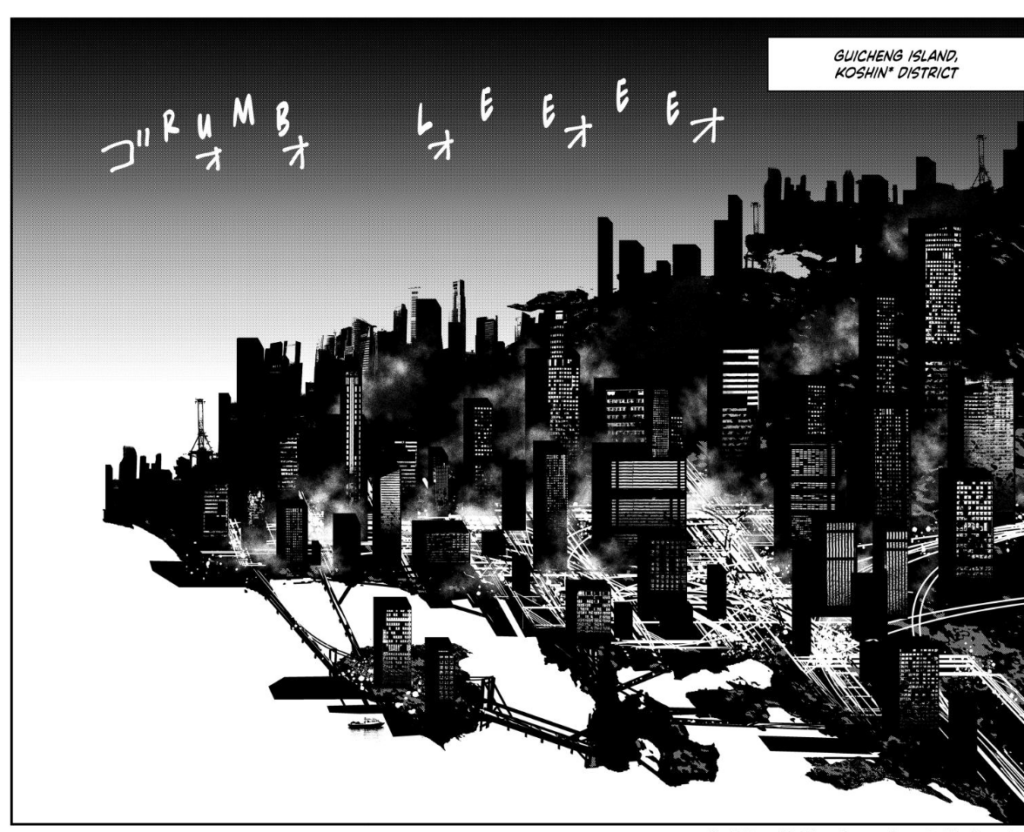
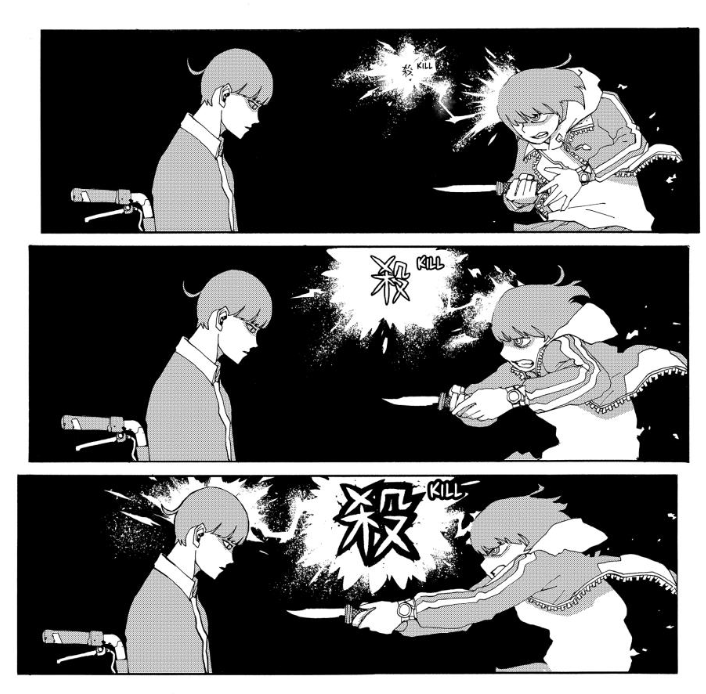
“Killing intent” is a common trope, but in Tank Chair, it functions almost like a biological adrenaline shot. How did you come up with visual indicators for something that is fundamentally invisible?
Manga is a medium where the art tells the story, so I thought it was a must to be able to get that across visually instead of with words or thought bubbles. By showing the normally invisible “killing intent” as something tangible, you can get a real sense of time and space. I think it makes for an exciting, satisfying read!
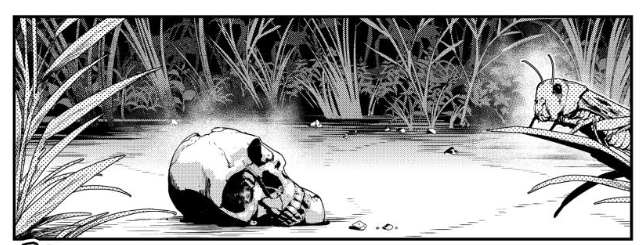
Your anatomy work (skeletons, muscle structures, etc.) feels grounded and precise, how do you approach studying human anatomy for such extreme action panels?
I’ve never actually studied art in an academic sense – all my experience is through self-study and vibes, essentially. I have done some studying of the basics of drawing and perspective while I’ve been working on my manga, but the biggest teacher has been actually drawing mountains of panels.
To be continued… Come back soon for part 2!
Follow Manabu Yashiro’s official socials below:
Official X Account
Official Instagram Account
Read Tank Chair on K MANGA!
Recommendations
NEW![K-9: Public Security Bureau, Division 9 – Special Abilities Countermeasure] Coolness is a Weapon – Interview with Tetsuya Okuyama – Part 2

Halloween Cosplay Ideas
[K-9: Public Security Bureau, Division 9 – Special Abilities Countermeasure] Coolness is a Weapon – Interview with Tetsuya Okuyama – Part 1
Vampires, Witches, and Monsters, Oh My!
Real Art, Real Doubts: Keiko Iwashita on Bringing Choking on Love to Life – Part 2