



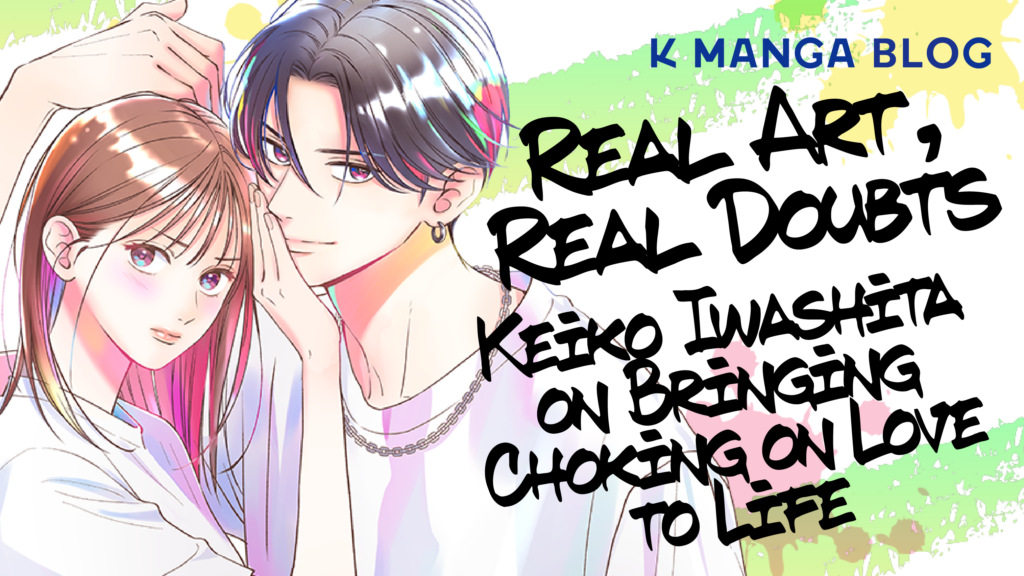
Welcome back to part 2 of this special interview with Keiko Iwashita! If you missed part 1, you can read it here.
Your depiction of instruments and live venues feels very authentic. Did you visit specific places for inspiration, or are locations like Club MJ based on real spots?
I did visit some real-world locations for inspiration. I went to live music clubs like CLUB QUATTRO (in Shibuya), SHELTER (in Shimokitazawa), and Zepp (various locations) to use them as references. The scene where Gaku and Hibari run away in the second volume is set around where Shinjuku JAM used to be. It was a kind of small and old venue, but it was awesome.
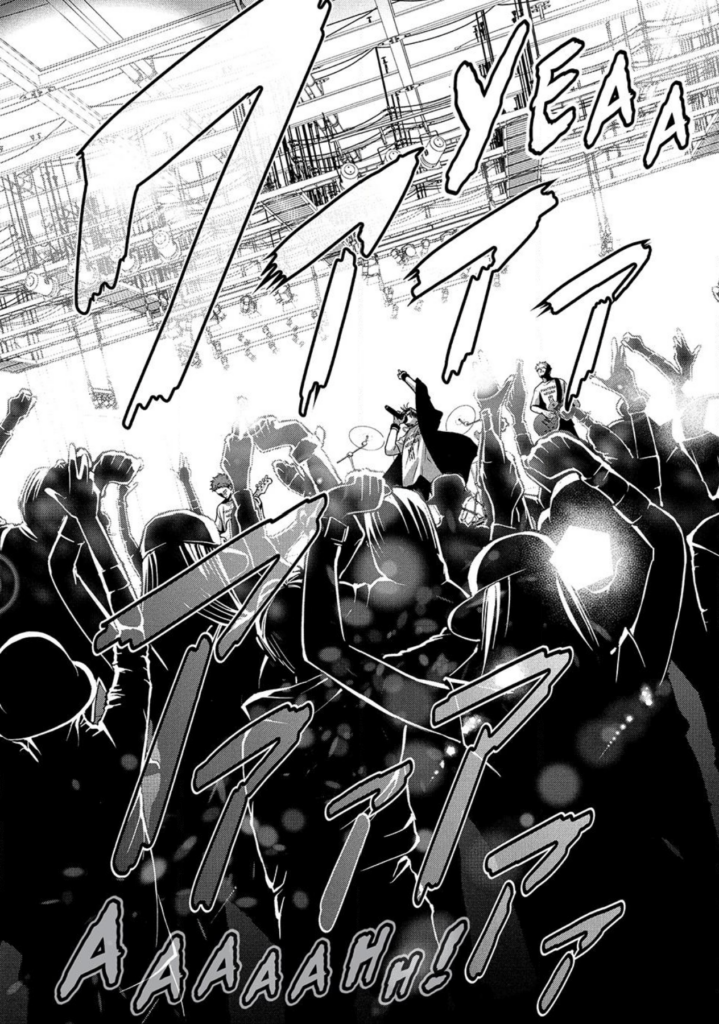
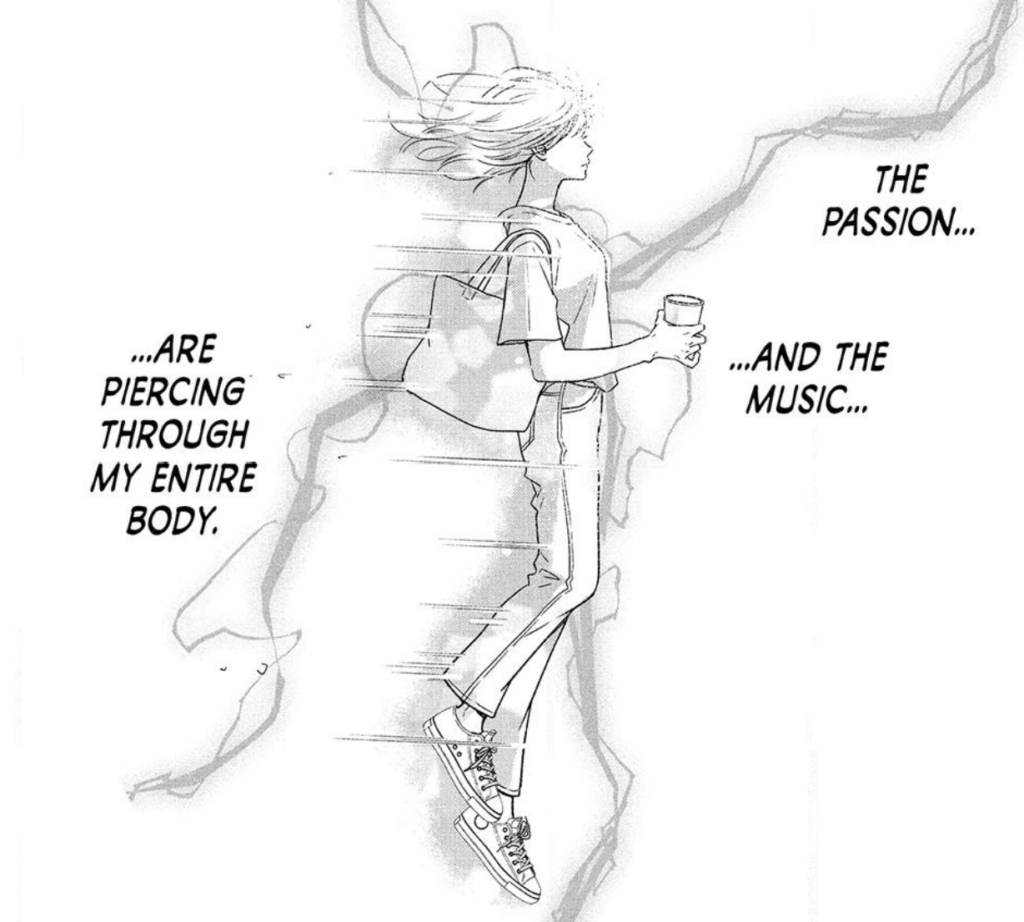
Drawing instruments is notoriously difficult, but you also capture the feeling of an audio experience visually! How do you approach drawing live band performances to make them feel loud and energetic on a static page, and how do you design visuals for people experiencing brand-new music?
Honestly, without my assistants, I wouldn’t be able to finish things up or meet the deadlines. When it comes to the live music parts, I draw based on what feels right. I also watch a lot of live music videos and look through photos! If you have no idea what they look like, it’s kind of impossible to draw. I put a lot of effort into thinking about what kind of rhythm and vocals I want to convey despite there being no sound, though I do add visual indicators like music notes when it’s harder to get across sometimes.
Do you listen to specific bands or songs while drawing PANTERA NEGRA to help capture their specific sound?
A whole bunch! Nirvana, OFFICIAL HIGE DANDISM, King Gnu, Yonezu Kenshi, The Oral Cigarettes, Novel Core… a lot of artists I’m sure you’ve heard of before. As a side note, when it comes to the staging of the live performances, the first artist I used as a reference wasn’t a band, but the girl group Perfume. Specifically, live footage from their GAME tour. The idea I have in my mind for Gaku’s voice is also along the lines of Yonezu Kenshi and the vocalist from The Oral Cigarettes. I also used Cry Baby by OFFICIAL HIGE DANDISM as a reference for PANTERA NEGRA’s debut concert.
Readers are deeply invested in the side cast, especially Airi and Joichirou! Was their dynamic something you planned from the very beginning, or did their chemistry surprise you as you were drawing them?
I’ve had a solid idea of what type of person Jo is from the start. A handsome guy who’s very cool and leaves you wondering whether he likes you or not. I thought making him a different type of handsome from Gaku would be fun for the readers. He’s modeled after a guy I had a crush on during my university days. I really wanted to capture the essence of this unfairly cool guy who left me with a bunch of unresolved feelings during my student days. I wanted to draw a one-sided love for Airi.
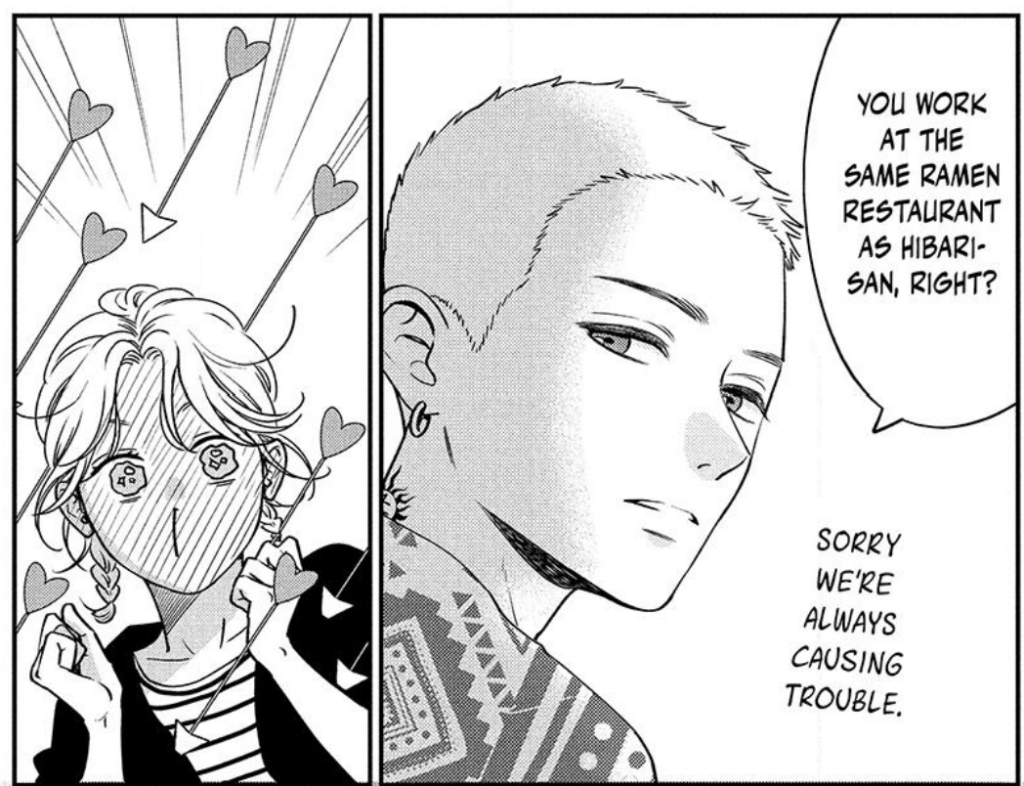
Band members eating ramen is such a classic real-life trope! Do you personally enjoy ramen, and if so, what is your favorite style?
I do like ramen! My favorites are tonkotsu (pork bone broth) and ie-kei (soy sauce + tonkotsu). Recently, though, they’re getting a bit too heavy for my stomach to handle, so I’ve been enjoying shio (salt) and shoyu (soy sauce), which are what my son likes. I like to eat it served just the way it is without changing the flavor. Oh, and I don’t finish all the soup.
Fans were thrilled to spot references and even a cameo appearance from Matsunaga (Living-Room Matsunaga-san)! How did it feel bringing a piece of your previous work into Hibari and Gaku’s world?
It felt like seeing an old friend. It was really fun. There’s a sense of comfort in drawing him, I feel. I also get kind of excited thinking about what I can get him to do.
It had been a while since I drew him last, though, so he kind of didn’t look like himself. My editor pointed it out, and it summoned him back [laughs].
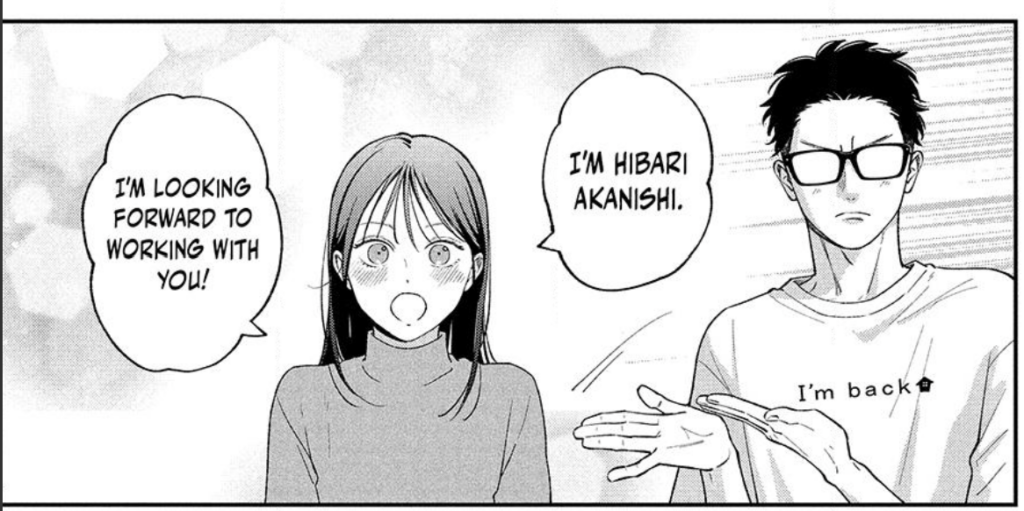
How do you approach the relationships between your characters and the overall story structure?
Visual appeal plays a big role in drawing readers in initially, but I also get a lot of feedback from people who admire how the lead characters interact as equals, constantly inspiring and elevating each other. I like to focus on building a deep sense of mutual trust, a bond that goes beyond a typical boyfriend-girlfriend dynamic, where just being together brings out their best.
As for narrative structure, I don’t necessarily map out every single detail from start to finish before writing. Instead, I identify the major plot milestones and work backward. I’ll ask myself, “If X happens here, what needs to happen earlier to make it truly emotional or shocking for the reader?” The first half of the story is intended to build up to those key moments, so I hope readers enjoy that journey.
Do you check reader reactions on social media, especially from international fans?
I do, quite a lot, actually! I step away and completely shut off social media if it gets overwhelming, but whenever a new chapter drops or a volume comes out, I definitely check both Instagram and X (formerly Twitter).
Overseas fans are incredibly fast to respond, and the sheer volume of feedback from them is amazing. Knowing that people in so many different countries far away from Japan are enjoying my work is a huge source of encouragement. I’m deeply grateful for that support. If readers across different borders can connect with the excitement, admire that deep trust beyond romance, and simply enjoy the story, that makes me happier than anything.
Have you noticed differences between how Japanese and overseas readers respond?
Definitely. Japanese readers tend to hold back from leaving quick, spur-of-the-moment thoughts; it’s like they often feel like they have to compose full sentences, so short comments are rare. Overseas fans, on the other hand, will instantly drop things like “OMG,” a wall of heart emojis, or funny meme images. Their energy and enthusiasm are so direct, and the emotion comes straight through. Whether it’s a full essay or just a single heart emoji, getting any reaction at all makes me unbelievably happy.
Finally, could you leave a message for your readers on K MANGA?
First of all, thank you all for this opportunity. None of this would be possible without you, the readers. I’m so happy that people in far-away places are enjoying my work, and it really encourages me in my work. Even if our countries and languages are different, I’d be delighted if you can empathize with the feelings of the characters and share the excitement of their journey. I hope you enjoy what’s to come in Choking on Love!
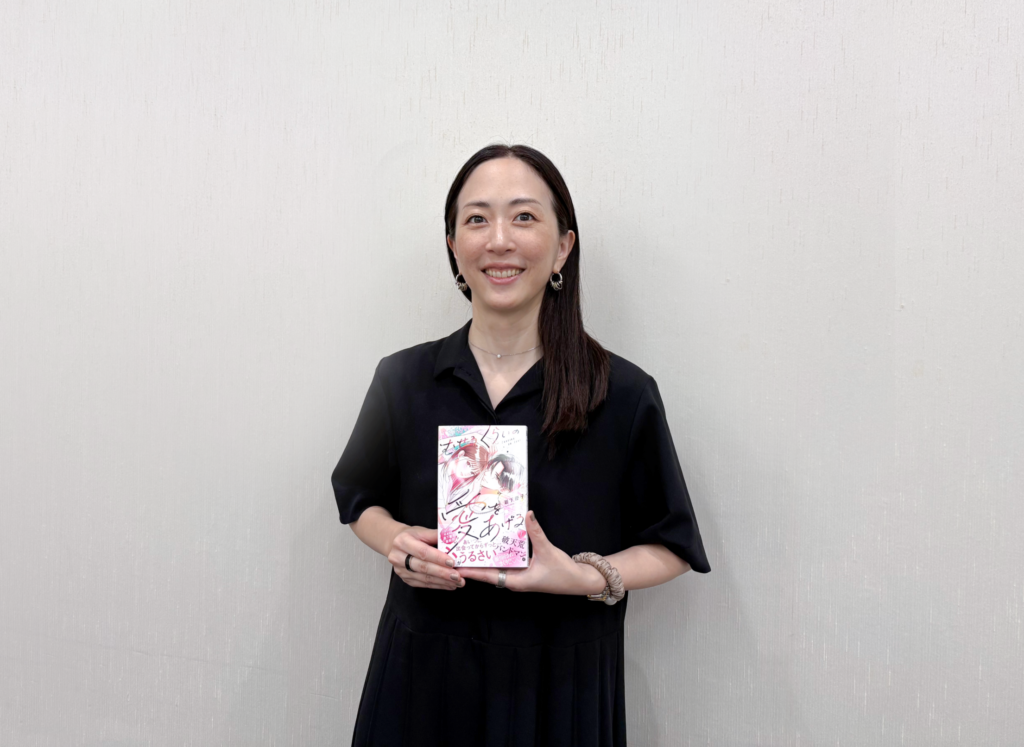
A special thank you to Keiko Iwashita for taking the time to share her insights into the creation of Choking on Love!
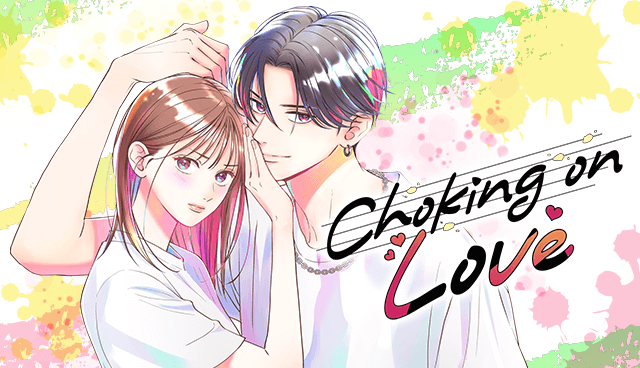
Read Choking on Love on K MANGA!
Recommendations
NEW!Don’t Wait for the New Episodes: Jump Straight Into These Manga This Autumn!
K MANGA Staff Picks Sept 2026
Real Art, Real Doubts: Keiko Iwashita on Bringing Choking on Love to Life – Part 1
What is Young Magazine?

[Promise Me the Spotlight] Going Viral – A Special Feature with AKB48’s Momoka Ito x Mizuki Natsuno! – Part 2