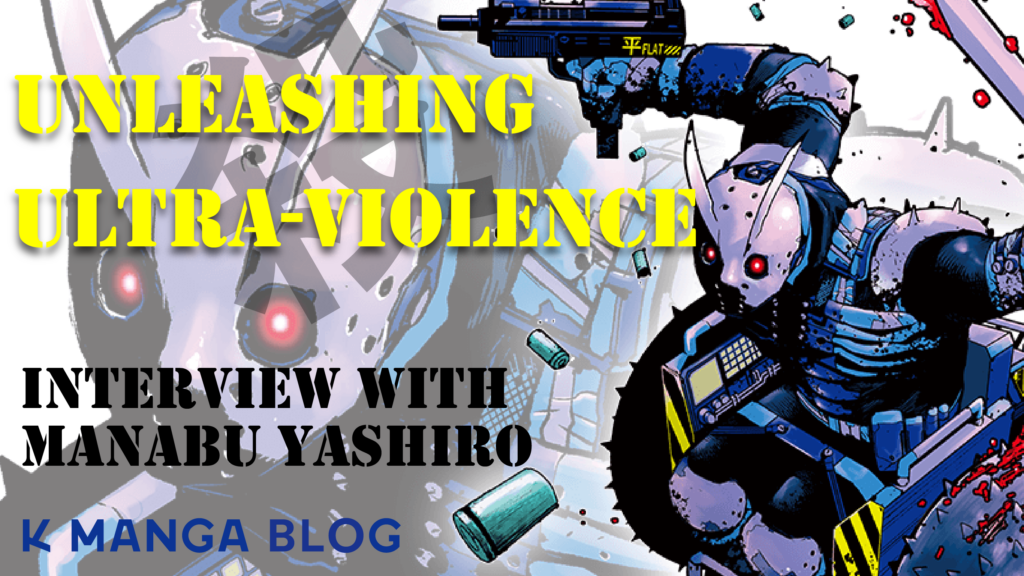
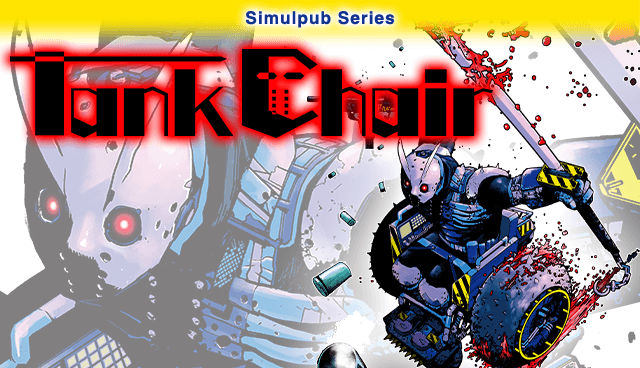
Welcome to Part 2 of our interview with Tank Chair creator Yashiro Manabu! If you missed Part 1, you can read it here. In part 2, we talk about action, inspiration, and the anime adaptation! Enjoy!
Nagi transitions from complete paralysis to hyper-violent action instantly. What is your process for pacing these visceral fight scenes and managing that sudden shift in movement?
To really give the art that sense of motion and speed, it’s essential to show complete stillness first. It’s precisely because of Nagi’s paralysis that the zero-to-one-hundred is so intense. Contrasting those two elements is the key to making it work.
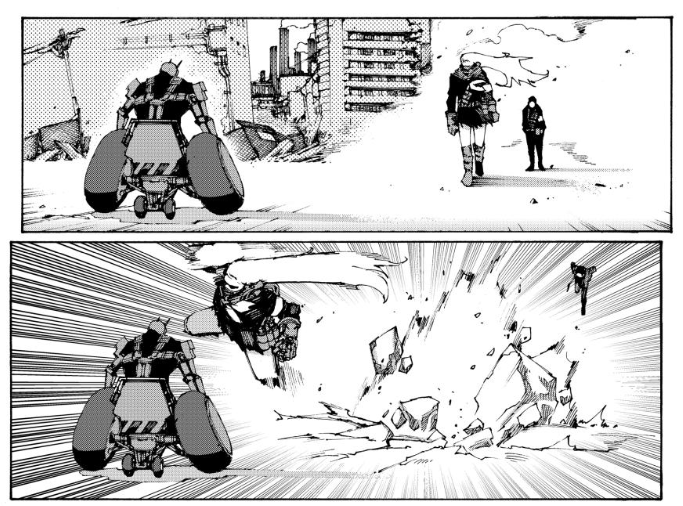
Tank Chair has an incredibly kinetic, almost noisy visual style, with heavy lines, grinding metal, exploding debris. What specific soundscapes, music genres, or noises do you hear in your head while drawing Nagi’s chair in motion?
I’m a huge fan of Capcom action games like Devil May Cry and Resident Evil, to the point where the sound effects and attack animations play automatically in my head whenever a hit lands. To capture that same punchy, visceral feel in my work, I play around with bold, brush-style sound effect lettering and dynamic compositions.
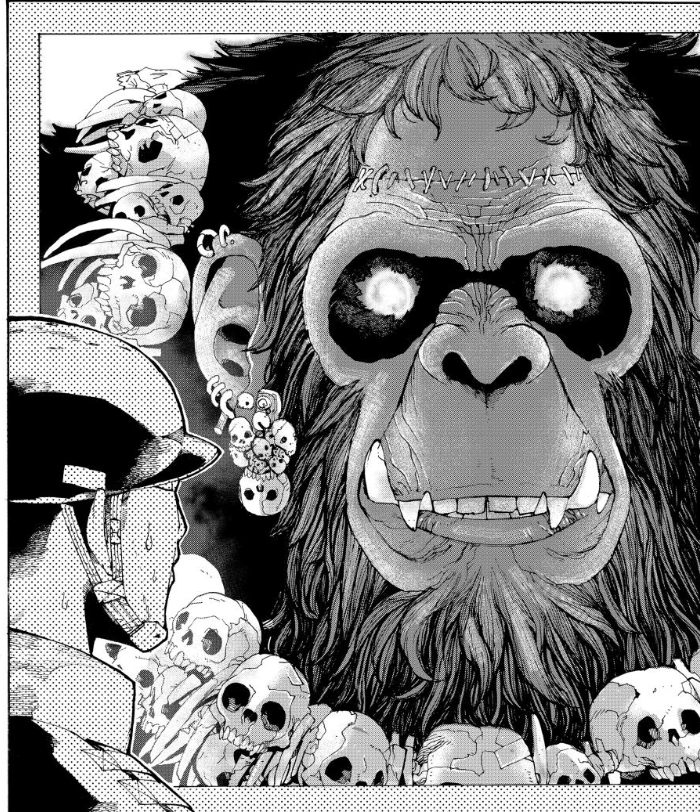
Who is your absolute favorite character to draw?
Honestly, I have the most fun drawing the disposable monster-of-the-week enemies who show up only to die right away rather than the main characters. Unlike the main cast, they aren’t weighed down by complicated backstories or narrative constraints. I can just unleash wild, experimental designs on them, knowing they’re one-off throwaways. They’re a lot of fun to draw.
What’s your favorite scene or panel in Tank Chair so far?
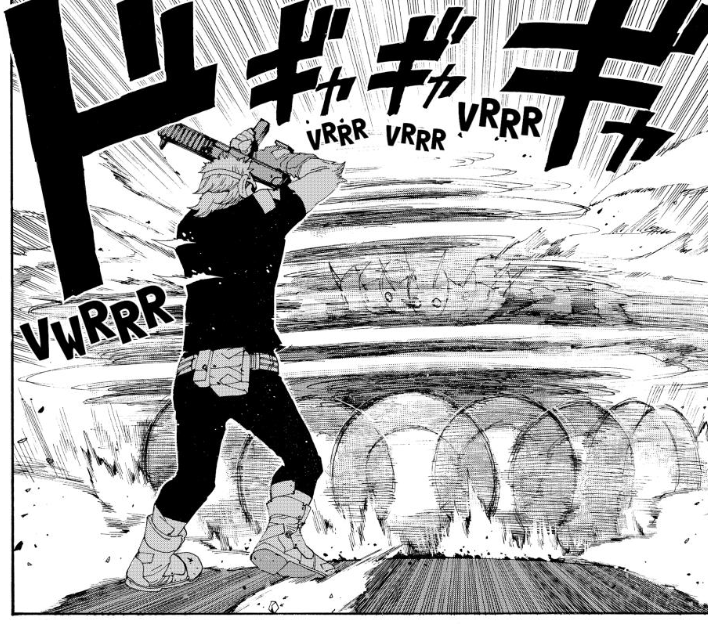
It has to be the panel in Chapter 1 where Nagi spins the wheelchair’s wheels in opposite directions, doing a high-speed pivot on the spot to slash through the enemy. It’s a move unique to a wheelchair, something impossible for a human standing on their own two legs, and it’s the scene I’m most attached to. Honestly, I could say I drew this entire manga just for that single panel.
Your X bio mentions you’re a fan of Godzilla, Mega Man, and Resident Evil. What’s your favorite title from each?
When it comes to Godzilla, the 1990s Heisei Godzilla series, particularly Godzilla vs. Mechagodzilla II. Among recent films, I absolutely love Shin Godzilla; I put it on in the background constantly while I work.
For Mega Man, definitely Mega Man Legends with its open-world 3D elements. That whole world and its aesthetic had a massive influence on me as a kid.
The original Resident Evil 2 on the PS1 (and its remake, RE2), plus Resident Evil 7, which is like a true return to the series’ horror roots are my favorites.
You frequently draw fan art, from DC characters to tokusatsu, and have even drawn official covers for Transformers comic books. How do you approach drawing in a style that’s quite different from your ordinary manga art?
I’ve always put pencil to paper to kind of absorb the works I love and the characters that inspired me. It’s less about reproducing every detail faithfully and more about processing the impact and charm a series had on me through my own personal style. I don’t really make art specifically for social media.
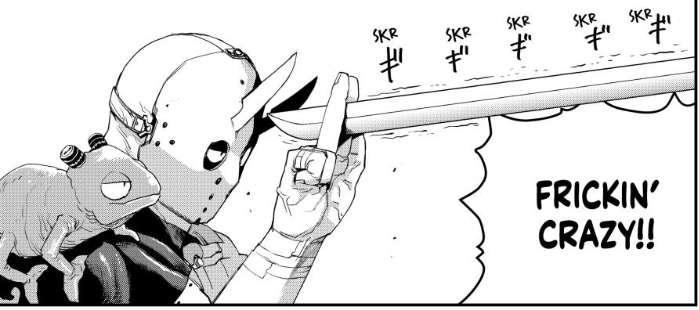
You also feature fun tropes and pop culture nods, like stopping a sword with just two fingers. How do you choose which iconic action tropes to pay homage to?
I don’t set out with the intention of paying homage to something specific from the start. Instead, I draw from a deep mental reservoir of influences, like a box of Lego bricks I’ve collected over time. As I assemble storyboards and plotlines, I’ll think, “It’d be fun to plug this piece in right here,” and it just clicks into place.
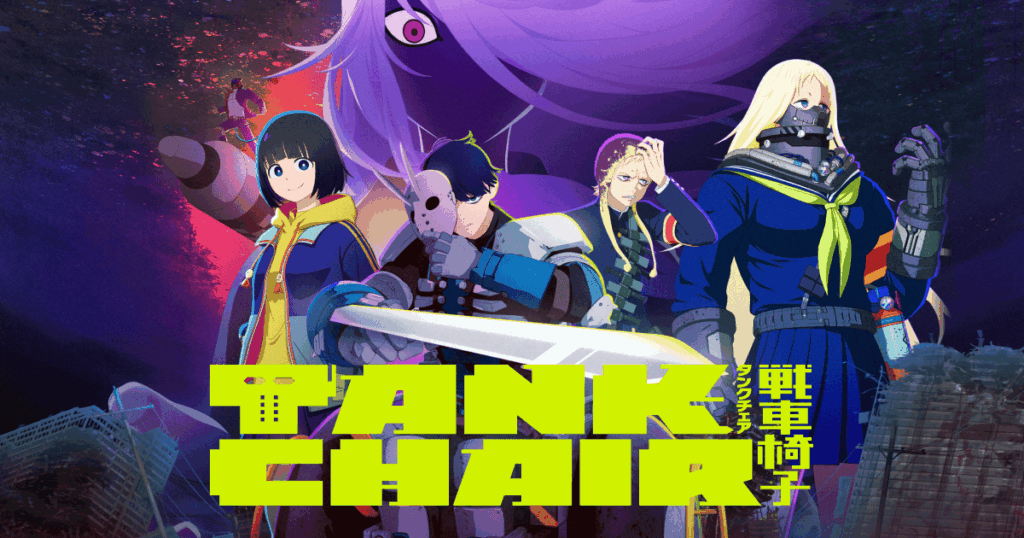
Huge congratulations on the anime adaptation! How did you react when you heard Polygon Pictures would be handling the animation, and what has it been like seeing your stylized work translated into 3D/CG motion?
I’ve been a huge fan of Polygon Pictures’ work, like Knights of Sidonia and BLAME!, for a long time, so I was thrilled when the anime adaptation was greenlit. Tank Chair features heavy line work and intricate designs blending mechanical precision with organic forms, making it pretty difficult to convert to traditional animation. That’s why I felt Polygon Pictures, as a pioneer in 3DCG, was the perfect partner. When I visited their studio about two years ago, they had already prepared rough 3D models for all the wheelchair attachments. Seeing their level of passion and commitment firsthand really moved me.
How did you feel when you heard the theme songs for the anime by SiM and Daoko?
When I listened to both tracks again after they were finalized, I was deeply impressed. They perfectly embody the dual nature of Tank Chair – there’s the violent intensity (SiM) and the raw, emotional side (Daoko). I couldn’t have asked for more perfect choices.
What was it like hearing the voice cast (like Koki Uchiyama as Nagi) bring your characters to life during the recording sessions?
I’m the type who doesn’t have a specific voice in mind while working, so it wasn’t until I heard the cast perform that it really clicked for me, like “Ah, so this is how they sound!” I was deeply inspired by the voice actors, who pored over the manga to learn more about the story and its characters, and offered genuine, heartfelt suggestions for their performances. They had fresh takes from a perspective different to mine.
How does it feel to see your work translated into full color and motion, reaching a global audience through the screen?
Since I usually spend my days holed up alone in my room drawing, it still feels a bit surreal that it’s reaching a global audience. An anime is something brought to life by the passion of the director and the entire staff, so I truly hope their incredible work receives the recognition it deserves, and I’ll do everything I can as the original creator to support them.
Tank Chair has gained a passionate fanbase both in Japan and overseas. Have you noticed differences in how domestic versus international fans react to the series’ unique blend of dark comedy and heavy action?
Having grown up heavily influenced by overseas culture myself, like Hollywood films, American comics, and French bandes dessinées, it makes me incredibly happy to see that my work resonates directly with readers across borders. Receiving so many passionate messages and direct reactions from international fans on social media has been a massive source of motivation for me.
And finally, can you leave a message to the readers on K MANGA?
Knowing that there are international readers following and supporting the series in real time is truly encouraging for me, it’s what fuels my energy to draw. I honestly feel the anime adaptation became a reality because of all your passionate support. I hope you enjoy the anime, share it with others, pick up the manga, and continue to support the series going forward!
A huge thank you once again to Manabu Yashiro for taking the time to chat with us about his incredible series!
Follow Manabu Yashiro’s official socials below:
Official X Account
Official Instagram Account
Read Tank Chair on K MANGA!
Recommendations
Unleashing Ultra-Violence: Manabu Yashiro on Crafting Tank Chair – Part 1
[K-9: Public Security Bureau, Division 9 – Special Abilities Countermeasure] Coolness is a Weapon – Interview with Tetsuya Okuyama – Part 2

Halloween Cosplay Ideas
[K-9: Public Security Bureau, Division 9 – Special Abilities Countermeasure] Coolness is a Weapon – Interview with Tetsuya Okuyama – Part 1
Vampires, Witches, and Monsters, Oh My!