This article was originally published on January 3, 2019.
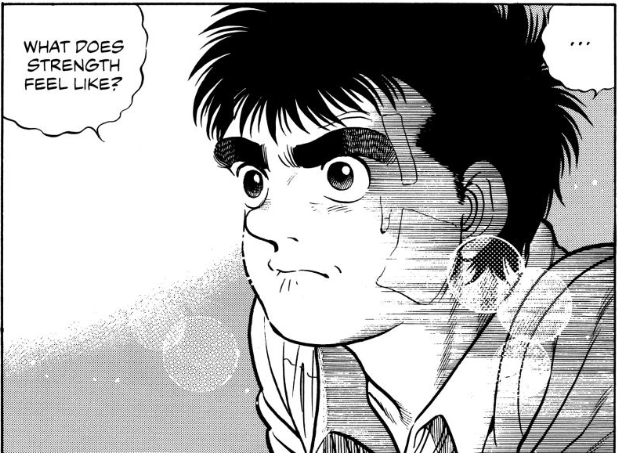
What does it feel like to be strong?
Beyond that question lies a dream! Part 1 of a special interview with Joji Morikawa!
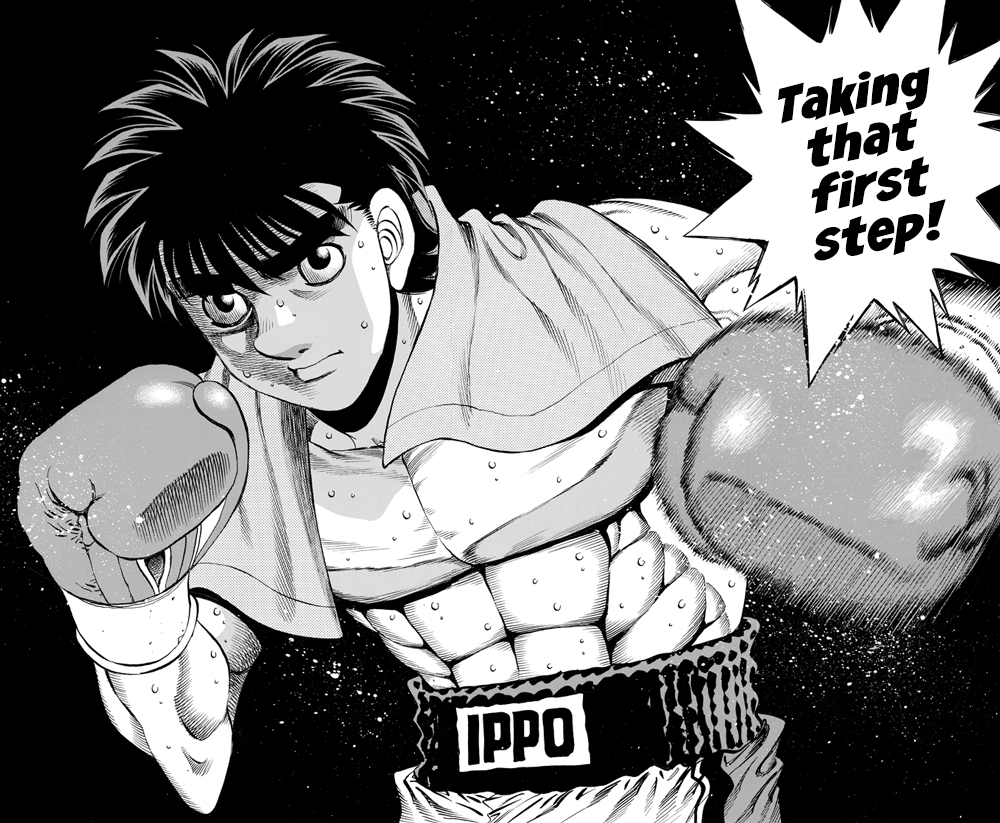
Stay tuned for this two-part special with details you’ll only hear here!
In the first half of this special talk, we talk to Joji Morikawa, the man behind Hajime no Ippo, about his journey to becoming a manga artist! Hajime no Ippo began serialization in issue 43 of Weekly Shonen Magazine in 1989 and is still going to this day. It also won Morikawa-sensei the 15th Kodansha Shonen Manga Award.
Becoming a Manga Artist
The Manuscript Review Arc
ーーI think there are a lot of manga artists out there who begin their journey with the initial manuscript review via an editorial department or entering a manga award competition. Morikawa-sensei, could you tell us what it was like for you when you brought your manuscript for review?
Morikawa: I first brought my work to be reviewed just before graduating junior high. I still remember being incredibly nervous when I picked up the phone to make my submission. I was only 15 years old at the time, afterall.
What spurred me on was the feeling of wanting to show them what I had done. I wanted to have a professional read my work and evaluate me, tell me where I stood among the other rookie manga artists. If you get that kind of feedback, you’ll know just how hard you have to push to improve yourself.
ーーBringing your work for review at the tender age of 15, that’s incredibly early, isn’t it?
Morikawa: The whole reason I wanted to become a manga artist was because I wanted to follow in Tetsuya Chiba’s footsteps. That’s why I thought getting started as soon as possible would be best. If I spent 10 years working as an assistant, I would already be 25. I thought I might be able to have my work published in the same magazine as Chiba-sensei.
ーーWhat was the reaction like from the editor at your review?
Morikawa: I brought a sad love story, in the realms of shojo manga, and they laughed as they read through it for some reason. I got a little angry, and said “This isn’t a comedy manga.” but it turns out, they were laughing at the disparity between the story I brought and the way I looked with my greaser hairstyle [laughs].
I left the work I’d brought with them, and it ended with them saying “just keep drawing.” There was no feedback or advice. I remember going home in a kind of daze. Then, about a week later, I got a sudden phonecall telling me that I’d received an honorable mention in the Monthly Grand Prix (MGP). I had no idea my work had been submitted, so I was confused at first.
But when I read the article in the magazine that mentioned the award, I was so happy I burst into tears. I mean, my name was in the same publication as Tetsuya Chiba! From there, as I was told to “draw”, I did just that and started working on my next manga.
The Assistant Arc
ーーAfter your first experience receiving an award, what did your next steps look like?
Morikawa: My second story also received an honorable mention in the MGP, and my third was selected as a winner. I thought it was kind of incredible to be awarded something 3 times in a row. When my fourth story was selected as a runner-up in the Newcomer Awards, I was given the collection of all the winners to take a look at, and I remember being blown away by sheer talent of the other newcomers. Their art was amazing.
First prize that year went to Takatoshi Yamada-sensei, the creator of Dr. Coto’s Clinic. Seeing his work was a real wake-up call to what true top-tier talent looked like. I was recommended an assistant position after that, and started working while working on my own material while attending high school. That’s how my life became even deeper entrenched in manga.
ーーYour assistant work, your own work, your school work… that must have been tough.
Morikawa: Back then, I didn’t even know what basic stuff like storyboards or correction fluid were, so what I learned as an assistant was really eye-opening. I learned that it was okay to use thumbtacks to help draw effect lines, and that it was okay to make corrections with white-out [laughs].
I put all the things I learned on the job to use once I got home, and went through reams of manuscript paper while practicing. I also thought that I could just quit school whenever, so I would get out my paper and ink in the middle of classes to practice [laughs].
I lived and breathed manga for pretty much every waking hour. Drawing was so much fun, I just couldn’t stop myself. I was also working on my own projects – I was pumping out 30-page one-shots within about 15 days. I practiced hard until I got serialized. I knew I had to improve my drawing skills.
The Serialization Arc
ーーHow did you end up getting serialized?
Morikawa: I had a few one-shots published while I was working as an assistant, and then right around when I was graduating high school, my editor suddenly informed me I had been picked for serialization. We hadn’t discussed it at all, so I was quite surprised [laughs].
My plan was to work for 10 years as an assistant before going pro, but with encouragement from my editor, who told me I should take the opportunity to get serialized while I was young, I started working on a monthly manga for Magazine Special, which was about 2 years old at the time, while also working as an assistant on a weekly manga.
ーーWhat was the reaction from readers like?
Morikawa: I was not concerned whatsoever with making something that would be popular, so I was just having fun drawing. When I submitted the manuscript for the fourth chapter, I was told that the serialization would end with the next. It was cancelled after only 5 chapters. That was the first I learned of these things called “popularity” and “cancellation”.
However, at the time, all I could think after it ended was that I was granted freedom. I’d originally planned to work as an assistant for 10 years before going pro, so I thought it was quite impressive that I had my first serialization at 18 years old.
I actually was happy to have more time to work as an assistant. I think because I still didn’t fully understand the meaning of what it was to be cancelled. So when my next serialization was confirmed not long after, that too ended up being cancelled.
ーーDid anything change for you?
Morikawa: I realized that the job of a manga artist is not to draw manga, but to create something popular.It’s like how a professional baseball player’s job isn’t just to play baseball – it’s to win. I realized that relying on instinct or feeling alone was not the way to go.
Of course, there are artists who succeed that way, and I thought I might be the same but I realized that that path wasn’t the one for me. I created a group of internal personalities that I would hold meetings with, debating various ideas, before presenting those results to the world.
The Birth of Hajime no Ippo
ーーHow did Hajime no Ippo come about?
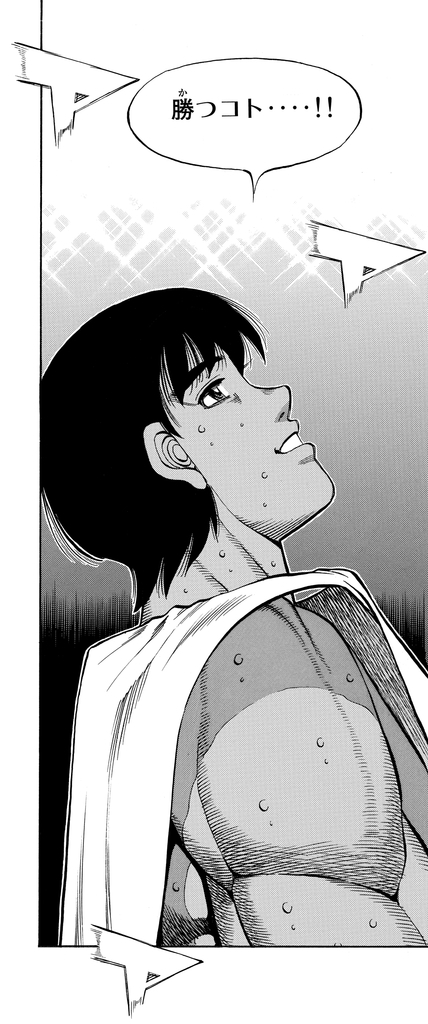
Morikawa: By that point, I had experienced cancellation three times, so I considered Hajime no Ippo to be my last shot as I worked on it. When I was working on the storybosrds for it, I basically lived at Kodansha.
I spent a year working and reworking the drafts, I think I maybe ended up doing something like 1000 pages total. It was originally supposed to be a manga about amateur boxing, but turned into one about professional boxing so the plot was completely different to what it was at the start.
ーーWas there anything you paid particular attention to?
Morikawa: Becoming popular. If you don’t become popular, there’s no fun in it. I mean, you just end up with no work. However, I had no idea how to become popular. So I read a ton of Tetsuya Chiba-sensei’s work. I looked up to him so much, and his manga basically served as a textbook for me. That feeling of “what does it even mean to be good at manga” translated into Ippo’s “what does it feel like to be strong?”
Overwhelmed, lost, and unable to make sense of anything anymore, I just laid down my raw, unfiltered feelings on paper. That became the first chapter of Hajime no Ippo, and subsequently the overall theme of the story. Though honestly, it’s a question I still haven’t found an answer to even now.
Advice to Aspiring Manga Artists
Morikawa: A storyboard isn’t a finished product, it’s just a rough draft meant to spark a discussion with your editor, so the key is to simply get it down. Whether it’s 40 or 50 pages, you should easily be able to knock it out in half a day. Just churn them out and get eyes on them.
You can’t judge for yourself whether your own work is interesting anyway, and at the end of the day, even if something only took an hour to throw together, if it’s entertaining, that’s all that matters.
Stay tuned for part 2!
Read Hajime no Ippo: Fighting Spirit! on K MANGA!

Recommendations
From Karuta to Katana: Celebrating Culture Day Through Manga

Holy Maidens & Magic: An All Saints’ Day Manga Reading List
K MANGA Staff Picks October 2026
Unleashing Ultra-Violence: Manabu Yashiro on Crafting Tank Chair – Part 2
Unleashing Ultra-Violence: Manabu Yashiro on Crafting Tank Chair – Part 1