This article was originally published on January 10, 2019.
In the second half of this interview with the legendary Joji Morikawa, we talk about what goes into creating manga!
Impact and Passion
The secrets to crafting a scene and making it feel real!
Hajime no Ippo began serialization in issue 43 of Weekly Shonen Magazine in 1989 and is still going to this day. It also won Morikawa-sensei the 15th Kodansha Shonen Manga Award.
Visuals
ーーWhen it comes to your art, what are the things that you pay attention to, Morikawa-sensei?
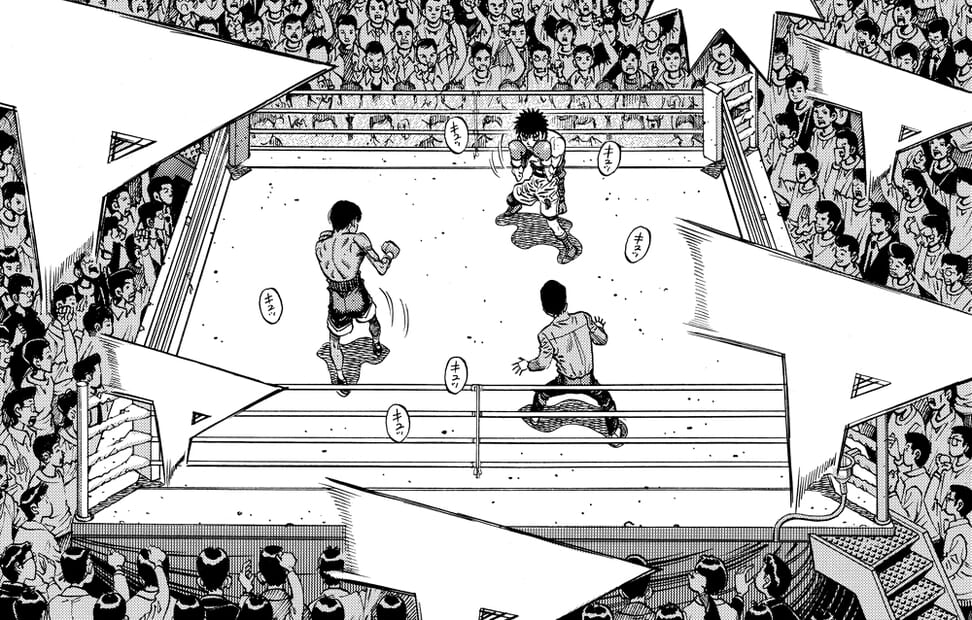
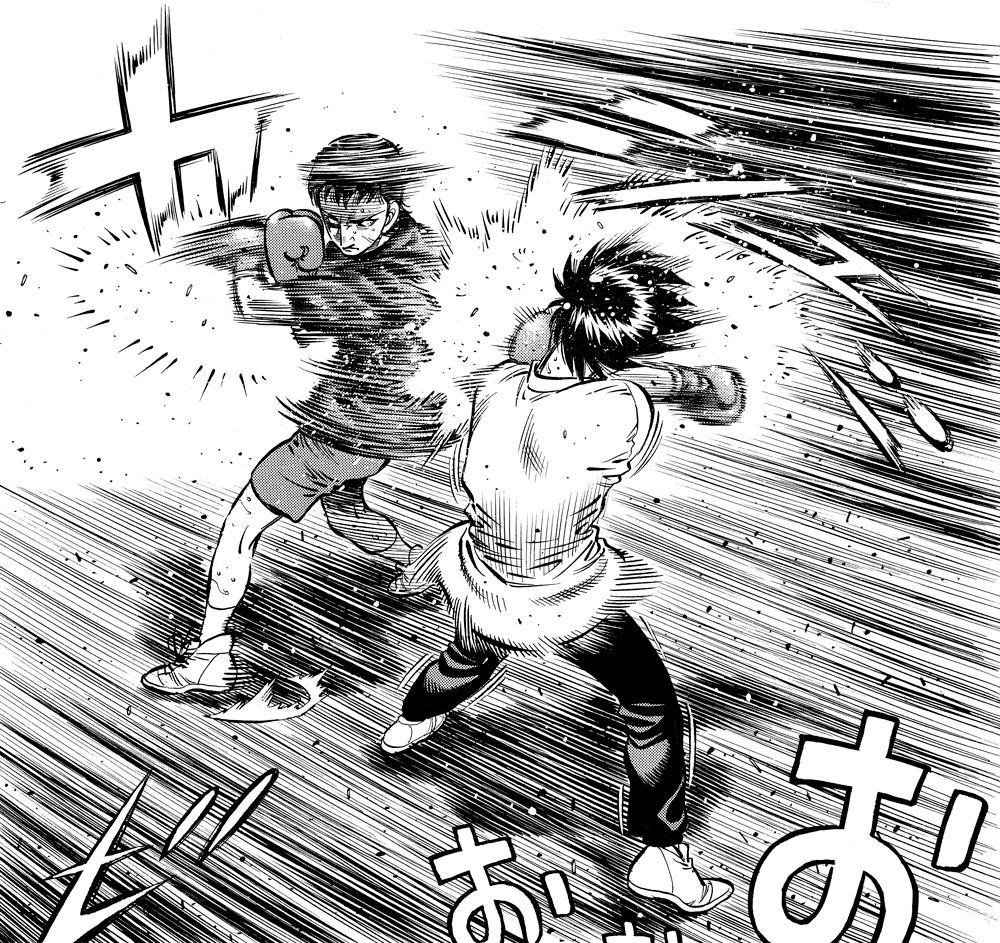
Morikawa: I try to make things easy to understand, first and foremost. I draw so that it’s easy to tell who, when, where, and what is going on at the bare minimum. For example, to make the hectic pace of boxing “easy to understand”, I draw from a high-angle, overhead perspective like it’s a televised match. Viewing the match from a bird’s-eye perspective makes it easier for the reader to grasp what’s going on.
ーーI feel like your images have more “punch” than a fight on TV. How do you make your art have so much impact?
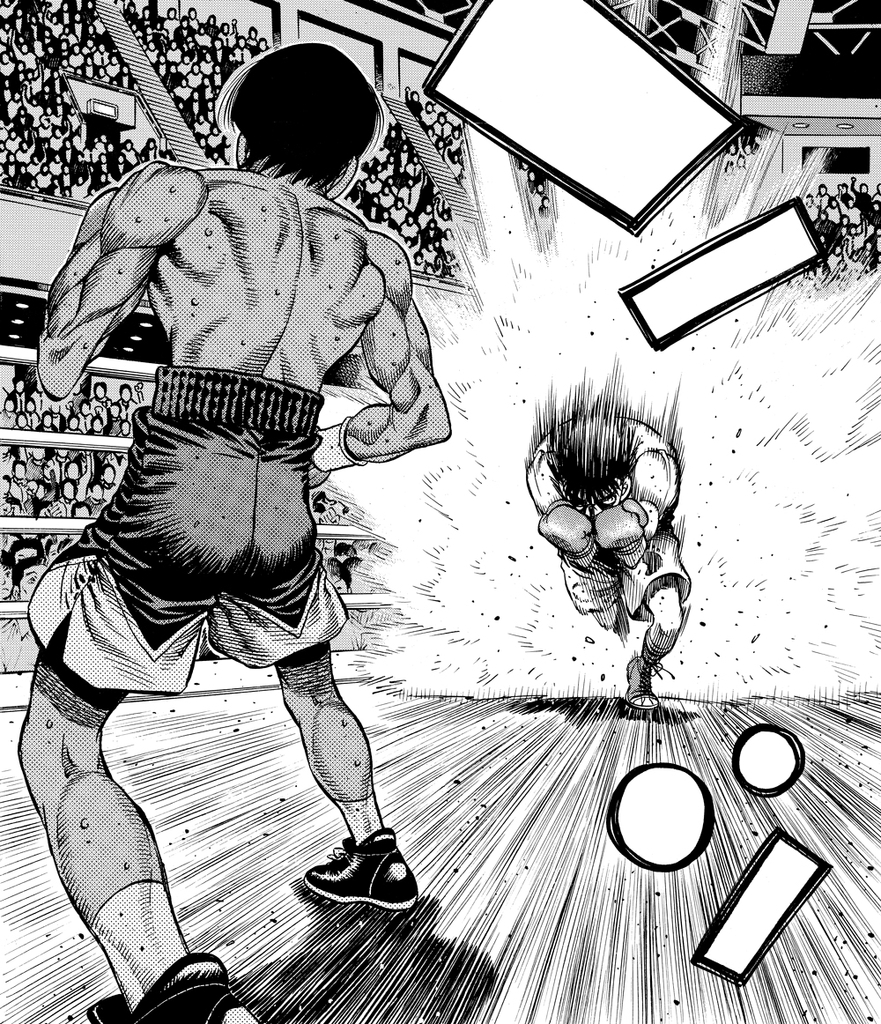
Morikawa: I’ve never once felt that my art has impact, but I keep in mind to never stop drawing. I draw not from photographs, but from videos for that purpose. Photos are still, so if you use those as reference, you’ll end up with art that has no movement. But with videos, you can see the elements you want to draw in one full sequence. It gives you a fuller understanding of what’s going on. Maybe the impact stems from that understanding.
ーーMaking things easy to understand is connected to the impact, right?
Morikawa: Making it easy to understand is important, but the most important thing is to remember that manga is fantasy, depicting situations most readers will never encounter in their lives. For example, I don’t think a lot of people have experienced being punched with someone else’s full weight behind it, so it’s very difficult to convey the pain of being hit like that in manga. But I do think it’s possible to get across the courage it takes to step into the ring and deliver that punch. That’s what I want to draw.
ーーIs it important to get real-world experience or first-hand accounts of things you want to draw?
Morikawa: I don’t think you need to have experienced the things you want to draw in manga first-hand. Manga is the power of imagination, after all. The creator of a mystery manga isn’t actually a murderer, you know. When you’re crafting a story, your imagination is very important. Like I mentioned earlier, using a video instead of a photograph for reference is better, but it’s best not to watch those videos over and over. Drawing based on your first impression helps you convey what you first felt even better.
Direction
ーーAnother important aspect of drawing manga is the direction. Could you tell us your thoughts on that?
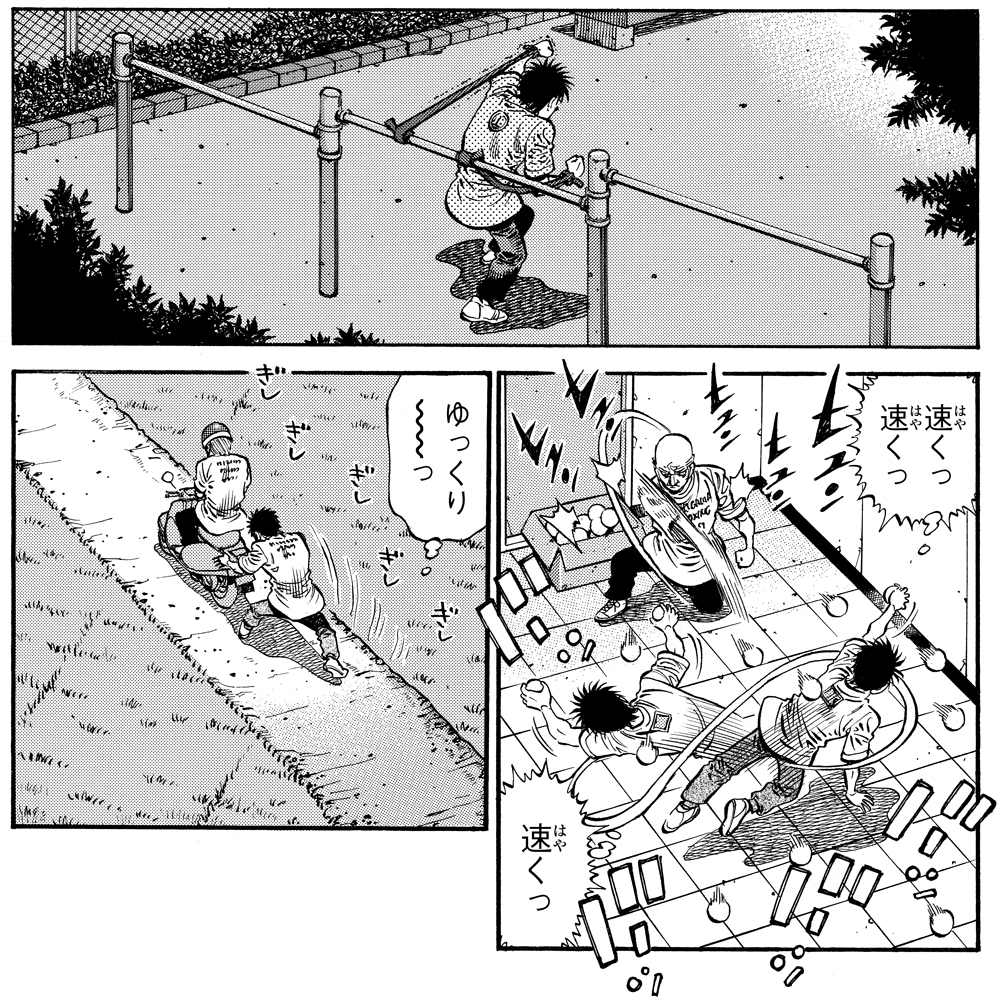
Morikawa: It’s a tough concept. I myself am still learning how to express it. One important aspect, though, is the “who” is doing something. If a character suddenly shows up out of nowhere, it doesn’t really make sense, right? It all comes down to how much you develop that character leading up to that moment. I think it’s precisely because Ippo practiced and practiced when he was learning how to master the Dempsey Roll, that, when he pulls it out, it carries such weight and impact. If you don’t show the effort it took, the reader will have no idea how strong that punch is, nor how heavy the impact is. Fleshing out your character’s story is a crucial part of directing. I also think it helps to make a manga feel more human. The ultimate result is making the reader feel like the character is a real person living through these events, not just some character on a piece of paper.
Character
ーーYou mentioned drawing the character’s story – could you tell us your thoughts on character creation?
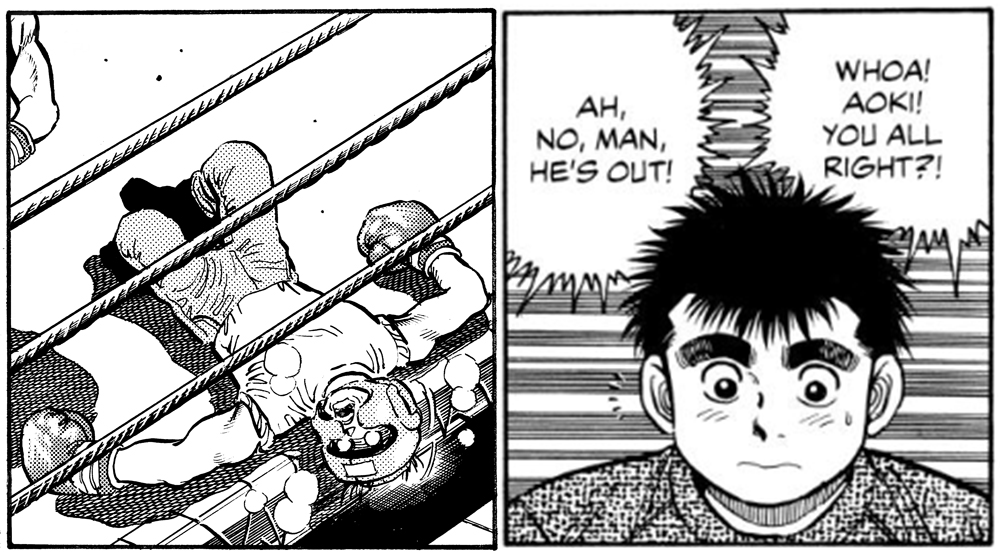
Morikawa: When I’m coming up with characters, I focus on their reactions. When you create a character, the ideas come from within yourself, so it’s almost certain that a character who shares a personality with the creator comes about. A lot of people struggle with character design and end up making a bunch of characters who just resemble themselves. When that happens, and you’re wondering what to do, you should pay attention to their reactions. For example, if Ippo is called out to from behind, he’d turn himself around and ask, “Yes? What is it?” Kimura would look over his shoulder and glance in that direction with a “huh?”, and Aoki would square up and snarl “What?” Takamura would probably just ignore it and keep on walking [laughs]. They all have their own unique reactions to situations. You can tell a lot about the type of person someone is and their circumstances based on their responses and how they refer to themselves. As long as you bear that in mind, you can create as many characters as you want.
ーーIs there anything specific you keep in mind that helps those characters feel like real people?
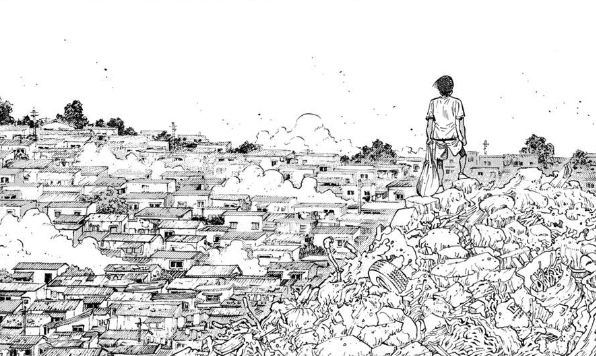
Morikawa: I think about how that character was born, how they were raised, their way of thinking, and how that has brought them to where they are today. For example, Takamura is the son of a rich family, so what made him throw all that away to be where he is today? In Ippo’s case, he fights because he wants to change his weaknesses. I try to make those important aspects of their backstories really solid. Those things affect how they’ll be feeling when it’s match time, why they don’t go down so easily, and so on, and it all lends to the authenticity of their story. I think in real life, though, no matter how strong your resolve is, if you get decked by a really strong punch, you won’t be standing afterwards [laughs].
ーーAside from depicting everyday life, is there anything else you pay attention to?
Morikawa: Drawing the transitions between expressions clearly. If you just depict generic emotions, the character will come across as flat. That’s why you need to focus on drawing the subtle, in-between expressions of the core emotions. Facial expressions aren’t just 100% “anger” or 100% “joy.”
ーーLastly, could you leave a message for any aspiring manga artists?
Morikawa: Thank you for reading all the way to the end of this article, but you don’t have to listen to what I say – just get out there and draw [laughs]. The only thing my seniors ever taught me is that whenever you’re lost, you should read your favorite manga by the artists you admire. Throughout this article, I’ve been saying things like “you should do this” or “you should do that,” but manga is all about freedom. So, I hope you’ll draw the kind of manga that’s true to you, freely.
Quick Questions for Morikawa-sensei!
ーーWhat’s your favorite scene?
Morikawa: Please read the next chapter. Not any up until now; I want you to read the next one. I often get asked what my favorite bout is, but I can only answer with “the next one”. I don’t think it’s good to get stuck on one favorite forever.
ーーWhat manga influence your own work?
Morikawa: Everything by Tetsuya Chiba. I don’t think there’s any manga out there that feels as human as his work does. Back when I was reading it, I really believed that Kunimatsu Ishida – the protagonist of Harris no Kaze, the manga that made me want to become a manga artist – was real. I was happy when he was happy, and sad when he was sad. That’s the level I aspire to.
ーーIs there anything you’d like to recommend to new artists?
Morikawa: Read a lot of manga. You’re going to be drawing a lot, after all. Read a ton of manga where you can feel that human warmth as research.
Read Hajime no Ippo: Fighting Spirit! on K MANGA!

Recommendations
Stepping into the Ring – A Special Interview with Joji Morikawa – Part 1
Unleashing Ultra-Violence: Manabu Yashiro on Crafting Tank Chair – Part 2
Unleashing Ultra-Violence: Manabu Yashiro on Crafting Tank Chair – Part 1
[K-9: Public Security Bureau, Division 9 – Special Abilities Countermeasure] Coolness is a Weapon – Interview with Tetsuya Okuyama – Part 2
[K-9: Public Security Bureau, Division 9 – Special Abilities Countermeasure] Coolness is a Weapon – Interview with Tetsuya Okuyama – Part 1